
Wall, Floor, or Pool Grade? Comparing Microcement Systems by Application
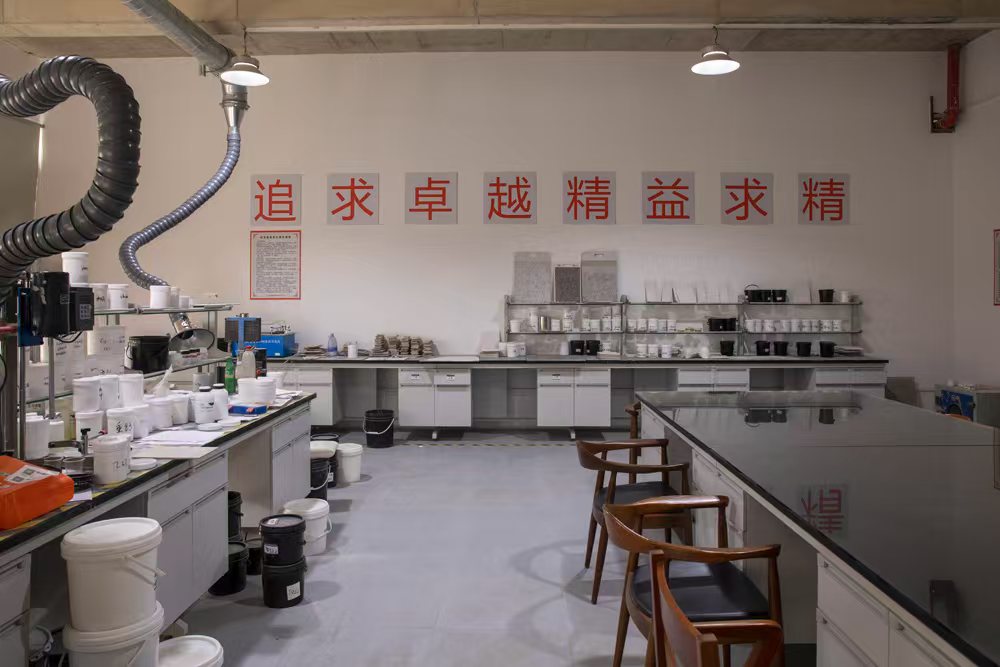
Manufacturing context for Simon microcement systems. Grade selection must be based on application exposure and datasheet performance, not on a colour sample.
The right microcement grade is the one whose published performance data matches the exposure, load and cleaning regime of the application area. For most projects, that means comparing three Simon system families rather than three colours: MC-7690 wall and floor microcement, MC-7860 swimming pool microcement, and MC-9000 commercial floor microcement. A sample board can confirm colour and texture. It cannot confirm compressive strength, surface hardness, chlorine resistance, slip resistance or thermal compatibility. This guide puts the three families side by side and closes with a datasheet-based decision framework.
Simon (Shenzhen Simon United Building Materials Co., Ltd.) is a microcement manufacturer founded in 2007, with a 4,000 m² facility, an annual output reported at 5,500 tons, and an export ratio reported at 42%. Its markets include Africa, the Middle East, Australia and Southeast Asia. The company states that it led the compilation of the T/CECS 10192-2022 Polymer Microcement group standard and holds more than 30 patents. Those facts explain why the discussion below uses defined system families rather than a generic 'microcement' label. The product question is not simply whether microcement is suitable. It is which grade is suitable for the wall, floor, pool or commercial floor in front of you.
Why a Sample Cannot Choose the Grade
A microcement sample usually shows a colour, a texture and a sheen. Those are finish decisions. They do not show the variables that control performance: the binder system, the aggregate, the reinforcement, the sealer and the substrate. Two samples can look identical while belonging to different application grades. One may be intended for a decorative wall; another may be intended for a commercial floor under continuous traffic. Choosing by appearance alone hides that difference until the floor is in service.
The failure modes also differ by application. A wall system is judged on adhesion, cracking resistance and appearance. A floor system is judged on compressive strength, surface hardness, abrasion and stain resistance. A pool system is judged on continuous water immersion, chlorine exposure and slip safety in wet conditions. A commercial floor is judged on point loading, wear, water absorption, wet slip resistance and thermal movement. A single number, such as compressive strength, does not cover all four cases. That is why the grade decision has to start with the application area, not the sample box.
The Application Problem Behind the Grade Decision
Microcement is a polymer-modified cementitious coating system. In the Chinese market, T/CECS 10192-2022 Polymer Microcement defines a boundary between Type I decorative microcement and Type II high-performance microcement. That boundary matters for buyers because it separates decorative wall use from floors with underfloor heating and commercial traffic. The standard is a useful pre-qualification reference, but it does not replace the product datasheet. The buyer still needs to see which grade carries which test value and which application limitation.
Simon organises its microcement range into Wall, Floor, Swimming Pool and Super Microcement Commercial Floor series. The company states that all series are formaldehyde-free and low in VOC, with EU Grade A+ and China Green Building Material dual certifications. It also states that its systems can be applied directly to ceramic tiles and marble substrates and can create a seamless wall-floor-ceiling effect. Those are system claims. They still need to be matched to the specific grade and project substrate. A wall grade applied to a commercial floor, or a decorative floor grade applied to a chlorinated pool, is a mismatch even if the colour is correct.
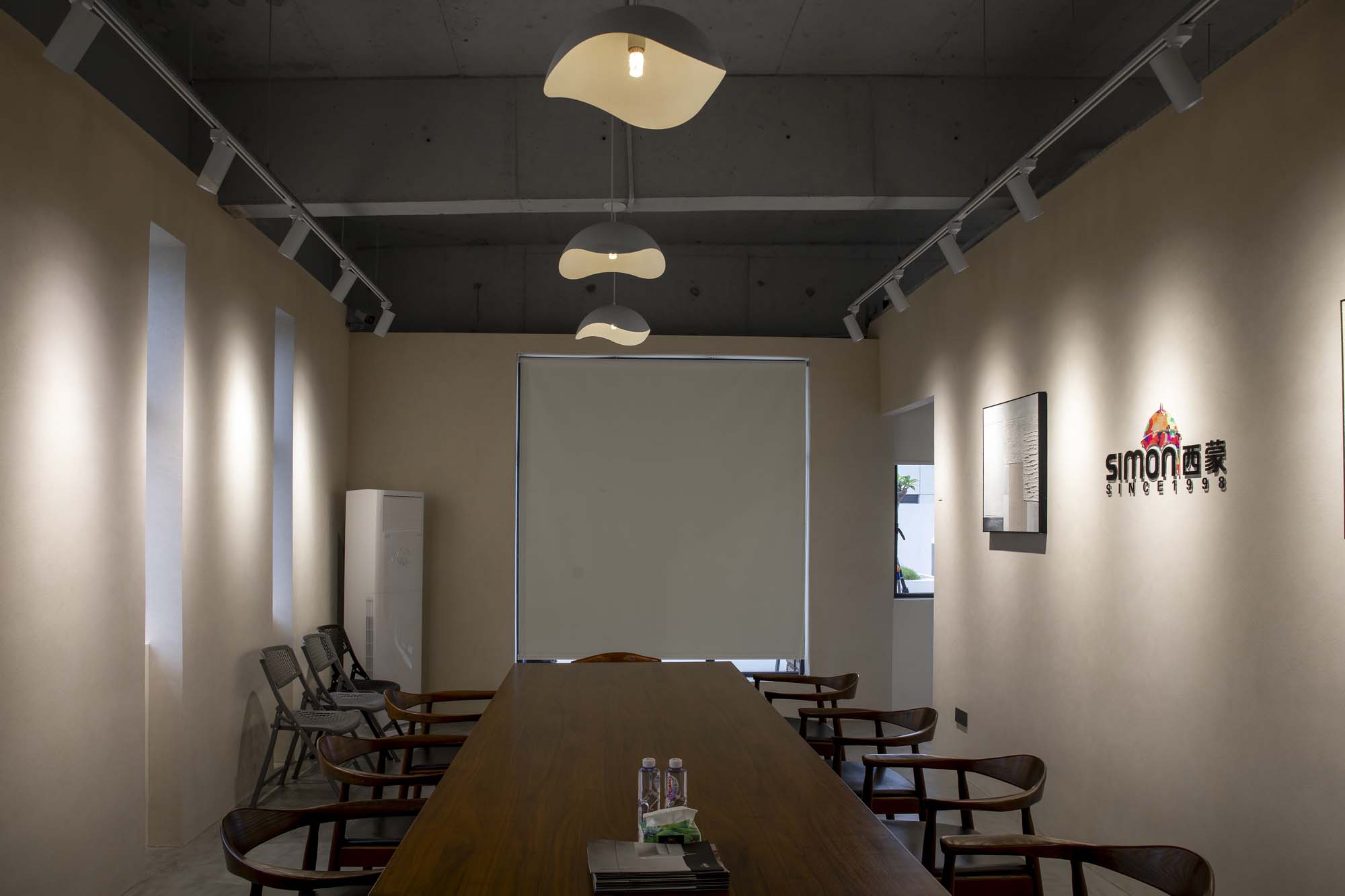
Production context. The application grade, not the visual finish alone, determines which performance data the buyer should verify.
The Three System Families at a Glance
The comparison below uses the published system figures for MC-7690, MC-7860 and MC-9000. The aim is not to rank one grade above another. The aim is to show which grade fits which exposure. A wall grade is not a weaker version of a floor grade in every respect; it is a different application system. A pool grade is not simply a floor grade with a different colour; it carries immersion and chemical data. A commercial floor grade is not a decorative floor with a thicker coat; it carries load, wear and thermal data.
MC-7690: One Family, Two Performance Levels
MC-7690 is the wall and floor microcement family. It is not one specification. The wall variant has a published compressive strength of more than 13.0 N/mm² and a surface hardness of more than 2H. The floor variant has a published compressive strength of more than 30.0 N/mm² and a surface hardness of more than 4H. Both are described with an A1 fire rating and a 72-hour wet-area soak result. The wall series is positioned for walls and ceilings, with a delicate texture and crack resistance. The floor series is positioned for floors, with waterproof, slip-resistant, acid and alkali resistant and oil stain resistant properties. The practical difference is clear: the floor variant carries higher strength and hardness because it takes traffic and cleaning. The wall variant is tuned for vertical surfaces and decorative continuity.
For a bathroom floor, the MC-7690 floor variant is the relevant starting point. For a feature wall or ceiling, the MC-7690 wall variant is the relevant starting point. For a shower wall that receives water but not continuous chlorinated immersion, the project still needs a substrate and waterproofing review. The published 72-hour wet-area soak result supports wet-area consideration, but it should not be read as a continuous pool immersion rating. That distinction belongs to the pool grade.
MC-7860: Pool Grade Is a Chemical and Immersion Specification
MC-7860 is the swimming pool microcement grade. Its published data includes a compressive strength of at least 40.5 MPa at 7 days, an abrasion value of 0.011 g, a dry friction coefficient of 0.77, a 168-hour chlorinated water immersion result, and acid and alkali resistance. The pool series is described as using a chlorine and bubble resistant formula, with temperature resistance, crack resistance and a high-grade anti-slip design. Those values address the conditions that separate a pool interior from an ordinary wet room: continuous water contact, chlorinated water, chemical balance and cleaning.
The 0.77 figure is a dry friction coefficient. It is useful, but it is not a wet barefoot slip result. Pool surrounds and pool interiors need wet slip verification in the actual finish and sealer system. The 168-hour chlorinated water immersion result is the key differentiator in this comparison. A wall or floor grade may be suitable for a bathroom, but the pool grade is the one with published chlorinated immersion and acid/alkali data. That is why a pool specification should not be value-engineered down to a wall or floor grade without written technical approval.
MC-9000: Commercial Floor Grade Is a Load and Wear Specification
MC-9000 is the Super Microcement Commercial Floor grade. Its published compressive strength is at least 50 MPa, with a 65 MPa heavy-duty version. It carries a Mohs hardness of at least 6, water absorption below 0.2%, an R11 wet anti-slip rating, and a service range of -40 °C to 130 °C with underfloor heating compatibility. The commercial floor series is positioned for schools, museums, shopping malls and hotels, with wear and stain resistance and easy cleaning. The heavy-duty version is the relevant option when the project brief includes high point loads, heavy foot traffic or equipment movement.
The commercial floor grade is not chosen because it is the strongest number in the range. It is chosen because the application demands a combination of load capacity, abrasion resistance, low water absorption, wet slip resistance and thermal stability. A museum floor and a shopping mall concourse may both be commercial, but they do not have the same cleaning regime or point-load profile. The datasheet values help the specifier ask the right follow-up questions: which version, which sealer, which substrate and which maintenance programme.
What the Published Numbers Actually Tell You
Compressive strength describes resistance to compression. It does not describe surface hardness, abrasion resistance or chemical resistance. Surface hardness, given here as 2H and 4H, describes resistance to surface indentation and scratching under the stated test. Abrasion, given here as 0.011 g for MC-7860, describes material loss under the stated abrasion test. A low abrasion value and a high compressive strength are different forms of evidence. Neither one alone proves pool suitability or commercial floor suitability.
Water absorption below 0.2% for MC-9000 is not the same as chlorinated water immersion for MC-7860. The first describes how much water the material absorbs under the stated test; the second describes exposure to chlorinated water over 168 hours. A fire rating of A1 for MC-7690 is not a thermal service range. The -40 °C to 130 °C range for MC-9000 is not a fire rating. These distinctions matter in a specification review because a single impressive number can be misused to imply a performance area it does not cover.
The correct reading is application-led. For a wall, ask for adhesion, crack resistance, fire rating and finish consistency. For a floor, ask for compressive strength, surface hardness, abrasion, stain resistance and slip. For a pool, ask for chlorinated immersion, acid/alkali resistance, wet slip and sealer compatibility. For a commercial floor, ask for compressive strength, Mohs hardness, water absorption, R11 wet anti-slip and thermal compatibility. The grade should be selected against that list, not against a colour card.
Side-by-Side Comparison by Application
| System | Typical application fit | Strength and hardness data | Exposure and chemical data | Slip, thermal and fire notes |
|---|---|---|---|---|
| MC-7690 Wall | Interior walls, ceilings, feature walls and decorative wall surfaces | >13.0 N/mm² compressive strength; >2H surface hardness | 72-hour wet-area soak result; wall series described with crack resistance and delicate texture | A1 fire rating. Not the pool grade in this comparison. |
| MC-7690 Floor | Interior floors, kitchens, bathrooms and wet rooms | >30.0 N/mm² compressive strength; >4H surface hardness | 72-hour wet-area soak result; waterproof, slip-resistant, acid and alkali resistant, oil stain resistant | A1 fire rating. Suitable for wet-area floors, but not the continuous chlorinated pool grade. |
| MC-7860 | Swimming pool interiors, pool wet zones and chemically exposed water areas | ≥40.5 MPa compressive strength at 7 days; 0.011 g abrasion value | 168-hour chlorinated water immersion; acid and alkali resistance; chlorine and bubble resistant formula | 0.77 dry friction coefficient; high-grade anti-slip design. Confirm wet barefoot slip in the final sealer system. |
| MC-9000 | Commercial floors in schools, museums, shopping malls and hotels; heavy-duty floors | ≥50 MPa compressive strength; 65 MPa heavy-duty version; Mohs ≥6 | Water absorption <0.2%; wear and stain resistant; easy cleaning | R11 wet anti-slip; -40 °C to 130 °C; underfloor heating compatibility. Heavy-duty version for higher loads. |
All three families are described as formaldehyde-free and low in VOC, with EU Grade A+ and China Green Building Material dual certifications. Certificate scope, sealer scope and project-specific substrate conditions still need to be confirmed against the exact product and market.
A Step-by-Step Specification Workflow
Step 1: Map the exposure. List every surface separately: wall, ceiling, floor, wet-room floor, shower wall, pool interior, pool surround and commercial circulation area. Do not use one grade across the whole project simply because the finish is meant to be seamless. Seamless appearance does not mean identical performance.
Step 2: Classify the load. A wall carries almost no foot traffic. A residential bathroom floor carries light traffic and occasional water. A pool interior carries continuous water and chemical exposure. A commercial concourse carries people, trolleys, cleaning machines and possibly point loads. Match the grade to the load case before discussing colour.
Step 3: Classify the cleaning regime. A wall may be cleaned occasionally with a damp cloth. A kitchen floor may see oil and household cleaners. A pool may see chlorinated water and pH correction chemicals. A commercial floor may see daily machine cleaning and stain removal. The cleaning regime is part of the specification because it affects sealer choice and chemical resistance requirements.
Step 4: Check thermal exposure. For underfloor heating, use the grade with published thermal compatibility. MC-9000 carries a -40 °C to 130 °C range and underfloor heating compatibility. A wall grade or pool grade should not be assumed to have the same thermal envelope. Ask for the specific system build-up over the heating assembly.
Step 5: Verify the datasheet numbers. Request the datasheet for the exact grade, not the family brochure alone. Check compressive strength, surface hardness, abrasion, water absorption, slip, fire rating, chemical resistance and thermal range. Check the units and the test conditions. A value without a test basis is a claim, not a specification.
Step 6: Review the substrate and construction conditions. Simon states that its systems can be applied directly to ceramic tiles and marble substrates. That does not remove the need to confirm substrate soundness, moisture, contamination and movement joints. Construction temperature should not be too cold or too hot, and base-surface humidity must be controlled. The construction plan should state those limits before work starts.
Step 7: Approve a mock-up. The mock-up should use the specified grade, sealer and substrate. It should be assessed for colour, texture, adhesion, slip and cleanability. For a pool, the mock-up should include the same sealer system intended for the pool interior. For a commercial floor, it should include the heavy-duty or standard version actually specified. A mock-up that uses a different grade proves only that the visual finish can be reproduced, not that the system meets the application.
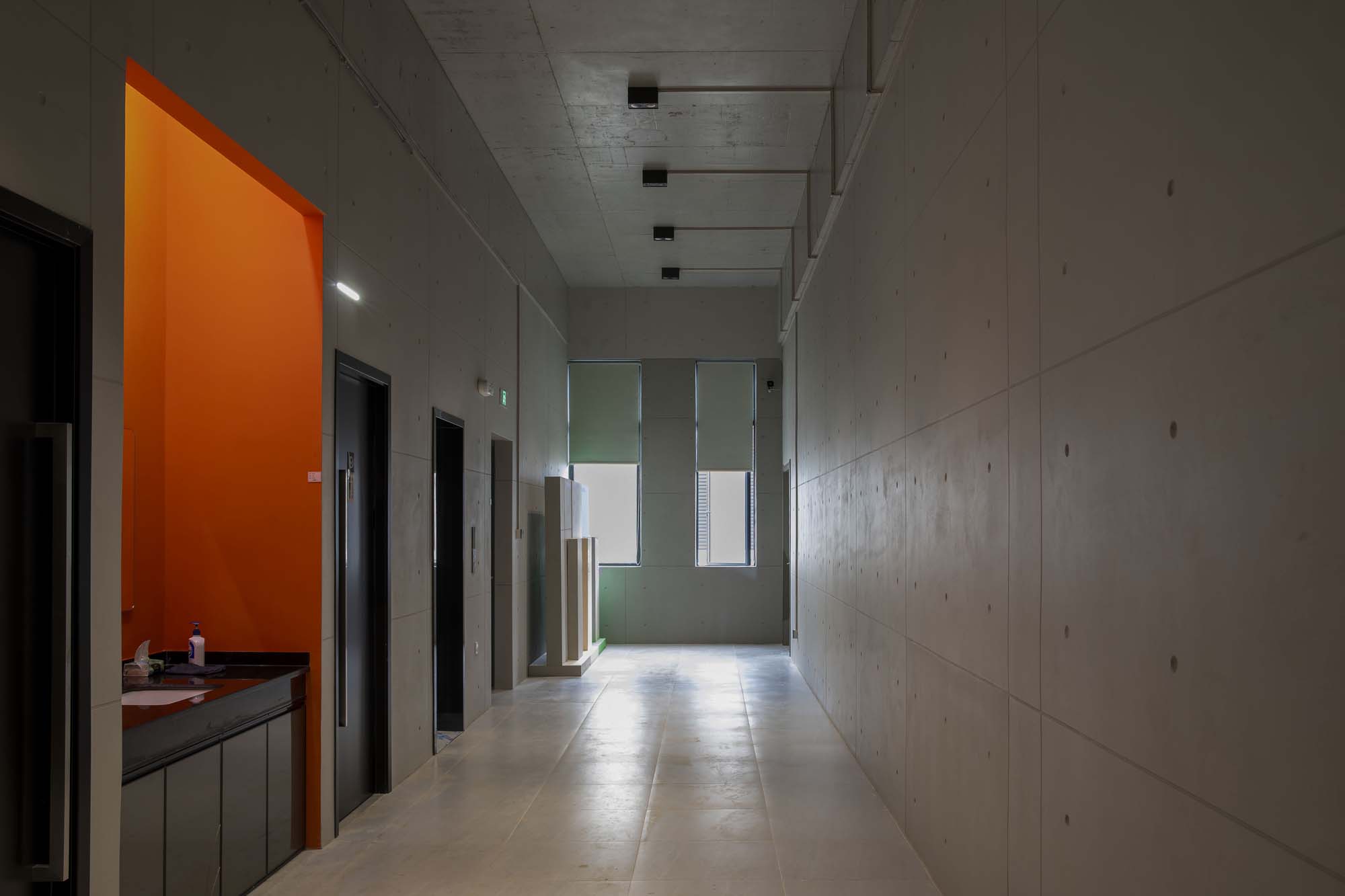
Quality control and production context. Datasheet verification should identify the exact grade, sealer and system build-up, not only the colour name.
Application Scenarios: Matching Exposure to Grade
Interior walls and ceilings. MC-7690 Wall is the relevant starting point. The published >13.0 N/mm² compressive strength and >2H surface hardness reflect a vertical application where decoration and crack resistance matter more than foot traffic. The A1 fire rating is relevant where the wall specification includes fire reaction requirements. The 72-hour wet-area soak result supports wet-area consideration, but a shower or pool interior still needs the appropriate system review.
Bathrooms, kitchens and wet rooms. MC-7690 Floor is the relevant starting point. The published >30.0 N/mm² compressive strength and >4H surface hardness are higher than the wall variant because the floor takes traffic and cleaning. The floor series is described as waterproof, slip-resistant, acid and alkali resistant and oil stain resistant. The 72-hour wet-area soak result is relevant, but it is not a substitute for a continuous pool immersion rating.
Swimming pools and pool wet zones. MC-7860 is the relevant grade. The 168-hour chlorinated water immersion result, acid and alkali resistance, and chlorine and bubble resistant formula address the chemical exposure. The 0.011 g abrasion value and 0.77 dry friction coefficient are additional data points, but wet barefoot slip must be verified separately in the final sealer system. Do not specify a wall or floor grade for a pool interior unless the manufacturer provides written approval and the corresponding test evidence.
Commercial floors. MC-9000 is the relevant grade. The ≥50 MPa compressive strength, 65 MPa heavy-duty version, Mohs ≥6, water absorption <0.2%, R11 wet anti-slip and -40 °C to 130 °C range address the load, wear, water and thermal requirements of commercial floors. Schools, museums, shopping malls and hotels have different traffic and cleaning profiles, so the standard and heavy-duty versions should be selected against the actual project brief.
Underfloor heating. Use the grade with published thermal compatibility. MC-9000 carries underfloor heating compatibility and a -40 °C to 130 °C service range. For other grades, ask for the specific system build-up and thermal cycling evidence. A decorative wall grade should not be assumed to be underfloor-heating compatible simply because it is part of the same microcement family.
Exterior projects. This comparison covers wall, floor, pool and commercial floor grades. If the application is exterior, request exterior-specific UV, freeze-thaw and water-repellent evidence. Do not assume that an interior wall grade is exterior-rated. The keyword 'exterior microcement' describes a different exposure set from the interior wall, floor and pool applications compared here.
Decision Framework: Exposure, Load and Cleaning Regime
Use three filters in order. First, exposure: will the surface see occasional water, continuous chlorinated water, cleaning chemicals or only dry interior air? Second, load: will it see foot traffic, point loads, equipment movement or almost no traffic? Third, cleaning regime: will it be cleaned with a damp cloth, household cleaners, chlorinated pool water or daily commercial machine cleaning? The grade follows those three answers.
The decision rules are direct. For a dry interior wall or ceiling, start with MC-7690 Wall. For an interior floor in a kitchen, bathroom or wet room, start with MC-7690 Floor. For a pool interior or continuously chlorinated wet zone, start with MC-7860. For a commercial floor with high traffic, point loads or underfloor heating, start with MC-9000. If the project mixes these areas, split the specification by area. A seamless visual scheme can still use different grades behind the finish.
Do not choose by colour, texture or sheen alone. Colour can be customised across the range: Simon states that it offers 120 basic colours and more than 1,000 colour mixing formulas. That is a finish capability, not a performance rating. The performance rating is on the datasheet. The buyer should compare the datasheet values for the exact grade against the exposure, load and cleaning regime. If a supplier cannot provide the grade-specific datasheet, the sample is not enough to support a specification decision.
Datasheet Verification Checklist
- Confirm the exact grade and variant: MC-7690 Wall, MC-7690 Floor, MC-7860 or MC-9000.
- Check compressive strength and surface hardness for the intended application.
- Check abrasion, water absorption, slip and chemical resistance where relevant.
- Check fire rating for the wall specification and thermal range for underfloor heating.
- Confirm the sealer system and its slip, stain and chemical performance.
- Confirm substrate suitability, moisture limits and construction temperature.
- Request a project-specific mock-up using the specified grade and sealer.
- Confirm certificate scope, batch colour approval and maintenance instructions.
FAQ
What compliance evidence should I check before choosing a microcement grade?
Check the grade-specific datasheet first, then the compliance documents. For MC-7690, the published data includes an A1 fire rating and a 72-hour wet-area soak result. Across the Simon range, the company states formaldehyde-free and low VOC performance, EU Grade A+ and China Green Building Material dual certifications, and reference to T/CECS 10192-2022 Polymer Microcement. For pool work, add the 168-hour chlorinated water immersion and acid/alkali resistance evidence for MC-7860. For commercial floors, add Mohs hardness, water absorption, R11 wet anti-slip and thermal range for MC-9000. Confirm that each certificate or test report applies to the exact product, sealer and market.
Can one microcement grade serve walls, floors and pools?
No. The published comparison separates the application families. MC-7690 Wall is the wall and ceiling variant; MC-7690 Floor is the floor variant with higher compressive strength and surface hardness; MC-7860 is the pool grade with 168-hour chlorinated water immersion and acid/alkali resistance; MC-9000 is the commercial floor grade with ≥50 MPa compressive strength, a 65 MPa heavy-duty version, Mohs ≥6, water absorption <0.2%, R11 wet anti-slip and underfloor heating compatibility. A wall or floor grade should not be substituted for a pool grade without written technical approval and the corresponding test evidence.
How should I compare budget between the three grades?
Compare installed system cost, not the price of a single bag. Include primer, base coat, reinforcement, finish, sealer, substrate preparation, access, labour and maintenance. A pool system includes different sealer and immersion requirements from an interior wall. A commercial floor may require the heavy-duty version, thicker build-up or additional substrate work. Ask for a line-item quote for the exact grade and area. A colour sample or a generic square-metre rate cannot show whether the pool, commercial or wall system is actually included.
What sample should I request before approval?
Request a sample of the exact grade and system build-up, not a generic colour board. The sample should use the specified sealer and substrate. For a pool, ask for chlorinated immersion evidence and a wet slip assessment for the final finish. For a commercial floor, ask for abrasion, Mohs hardness, water absorption, R11 and thermal data. For a wall, ask for fire rating, crack resistance and adhesion information. Then compare the sample against the datasheet, not against another supplier's sample under different conditions.
What affects lead time for a microcement order?
Lead time depends on the grade, colour, sealer, order quantity, production schedule and shipping route. A custom colour or a pool-grade sealer set may require additional production and approval steps. The practical control is to approve the datasheet, colour and mock-up before release, then confirm the production and shipping schedule in writing. Do not treat a generic lead-time figure as a commitment for a mixed wall, floor and pool order. For a live project, request a datasheet review and a project-specific sample from Simon; the brochure link at the end summarises the system families.
Conclusion
Wall, floor and pool microcement are not interchangeable finishes with different labels. They are application systems with different published performance data. MC-7690 Wall fits interior walls and ceilings; MC-7690 Floor fits interior floors and wet rooms; MC-7860 fits pool interiors and chlorinated wet zones; MC-9000 fits commercial floors, heavy-duty areas and underfloor heating. The decision framework is simple to state and demanding to apply: pick the grade by exposure, load and cleaning regime, then verify the numbers on the datasheet. Do not choose by colour or finish alone.
For project-specific documentation, review the exact grade datasheet and sealer system with Simon (Shenzhen Simon United Building Materials Co., Ltd.). The company brochure provides an overview of the product families and can be downloaded here: Simon microcement brochure.
Have Questions or Need More Details?
Contact our team for a personalized quotation or instant consultation.
Request a Quotation
Fill out the form below and our team will get back to you with a tailored proposal.
WhatsApp Direct Chat
Prefer to chat in real-time? Message us on WhatsApp for instant assistance & quick answers.
- Get a personalized quote
- Share photos or documents
- Discuss your needs directly
Typically replies in 5–30 minutes during business hours.