
Microcement Spec Guide: Matching Walls, Floors, Pools, and Commercial Projects
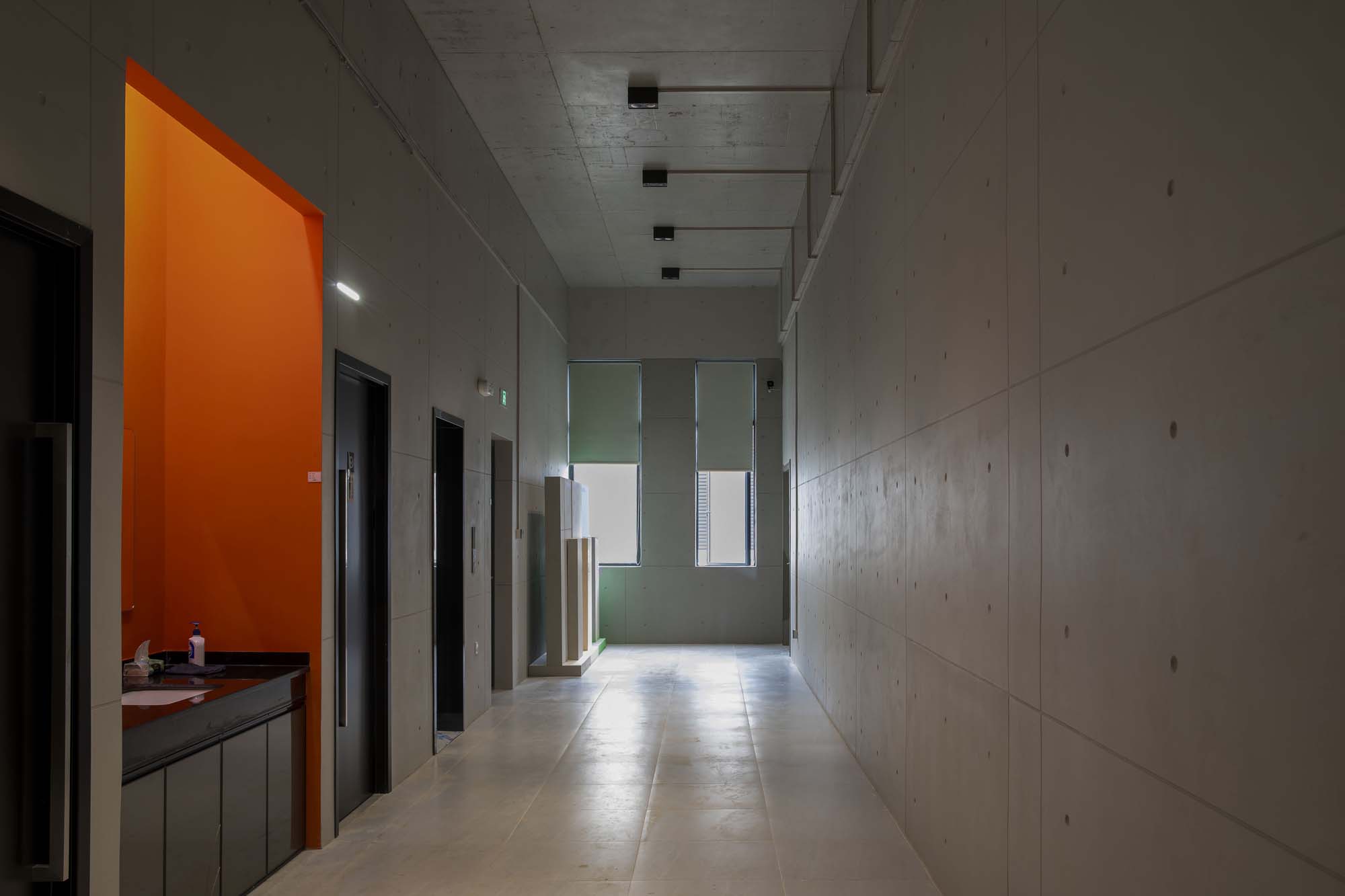
Simon microcement is produced in four application-specific series. The matching decision is made before the order, not on site.
Matching microcement to a building is a specification decision before it is a finish decision. Three variables decide whether an installed system performs across its full service life: how much water or chlorine the surface meets, how much mechanical load it carries, and what substrate it is applied onto.
This guide maps those variables onto three Simon models used most often by specifiers and project buyers — MC-7690 for walls and floors, MC-7860 for swimming pools, and MC-9000 for commercial floors — and sets out which parameters should be fixed in writing before production starts.
Simon (Shenzhen Simon United Building Materials Co., Ltd.) is a China-based microcement manufacturer founded in 2007, operating a 4,000 m² production base with a five-person R&D team and a portfolio organised into four application series: Wall, Floor, Swimming Pool, and Super Microcement Commercial Floor. The company led the drafting of the group standard T/CECS 10192-2022 Polymer Microcement, implemented in 2022, which defined the application boundaries of Type I and Type II microcement.
Where microcement specifications go wrong
Most microcement problems on site are not material failures. They are matching failures, and they fall into four recognisable patterns.
- Finish-first selection. A decorative system is chosen for its texture and then carried into a shower, a pool surround, or a food preparation area where continuous water, chlorine, or oil exposure is expected.
- Substrate assumptions. Microcement can be applied directly onto existing ceramic tile and marble bases, which removes demolition from the programme. It does not remove the need to control base surface humidity or the ambient temperature on the day of application.
- Certification conflation. An indoor air quality label answers a different question from a fire test, and neither answers chemical resistance. Treating them as one compliance block is how submittals get rejected.
- Traffic mismatch. A decorative surface is placed on a corridor, mall, or school floor that carries abrasive load every day of its service life.
The workable sequence is to classify each surface by exposure and load first, then select the grade that is engineered for that class — and to record both decisions in the submittal.
Industry background: why specification detail is under scrutiny
The global microcement coating market was valued at approximately USD 1.8 billion in 2025 and is projected to reach USD 3.6 billion by 2034, a trajectory described as an 8.1% CAGR between 2025 and 2034 (Dataintelo). Commercial applications account for roughly 42.7% of total revenue, and two-component systems — the chemistry family used where durability and bonding are the priority — held approximately 48.3% of product-type share in 2025. Europe remains the largest regional market, while Asia Pacific is the fastest-growing at approximately 38.5% of revenue (Market Intelo).
Supplier choice within that market spans established international names such as Topciment, Ardex Group, Sika AG and CimentArt alongside Chinese manufacturers including Simon. For a specifier, the practical consequence is that product claims are now plentiful, while documented performance values are not. A specification that ties each surface to a named grade, a stated parameter and a test or standard is easier to defend than one that compares brands by reputation.
Two regulatory drivers sit behind this shift. Low VOC and formaldehyde-free formulations are becoming the default expectation rather than a premium option, with waterborne polymer binders used to limit VOC emissions. In parallel, flooring systems in the European market are assessed against EN 13813:2002, the screed material standard that specifies requirements for compressive strength and wear resistance. A product that cannot be linked to a standard or a test report becomes difficult to place in a commercial submittal.
How Simon structures microcement by exposure class
Simon's microcement range is divided into four series, each defined by the environment it is designed to survive rather than by colour or texture.
- Wall Series — a fine, delicate texture with excellent crack resistance, intended for walls and ceilings in decorative areas.
- Floor Series — waterproof, slip-resistant, acid and alkali resistant and oil-stain resistant, developed to address water seepage in kitchens and bathrooms.
- Swimming Pool Series — a chlorine and bubble resistant formula with temperature resistance and crack resistance, finished with a high-grade anti-slip design for wet use.
- Super Microcement Commercial Floor Series — a maximum compressive strength of ≥50 MPa with wear and stain resistance and easy cleaning, applied in schools, museums, shopping malls and hotels, stable across -40℃ to 120℃ and specifically adapted to underfloor heating systems.
Three models carry most specification enquiries. MC-7690 is the wall and floor microcement used for dry-area vertical surfaces, ceilings and residential floors. MC-7860 is the swimming pool microcement built for permanently wet, chlorinated interiors. MC-9000 is the commercial microcement floor built for heavy-traffic public and institutional floors.
All three share the same environmental and application baseline: formaldehyde-free and low VOC formulations, EU Grade A+ and China Green Building Material certification, direct construction onto ceramic tile and marble bases, and a seamless wall-floor-ceiling finish. Colour is handled through 120 basic colours and more than 1,000 colour mixing formulas, which means a colour change does not have to become a grade change.
The six parameters that decide the match
1. Compressive strength
Compressive strength is a floor parameter, and it is the first value a commercial client asks for. The Super Microcement Commercial Floor Series, which includes MC-9000, reaches a maximum compressive strength of ≥50 MPa. For scale, ordinary cement paint sits in the 5–10 MPa band in Simon's published comparison, which is why a decorative cement coating and a commercial microcement floor should not be treated as interchangeable in a heavy-traffic area. Walls and ceilings do not need this figure; requiring it there raises cost without adding performance.
2. Flexural strength and crack resistance
Crack behaviour matters on substrates that flex and on thin decorative sections. The Wall Series is specified with excellent crack resistance, and the Swimming Pool Series combines crack resistance with temperature resistance, which is what allows the same material family to be used on pool shells. In Simon's published comparison with ordinary cement paint, cracking is given as below 0.1% against over 30% for cement paint, a gap that reflects the flexibility of a polymer-modified system rather than the thickness of the layer.
3. Adhesion and substrate compatibility
Adhesion is where the project programme and the material meet. Simon microcement can be constructed directly on ceramic tile, marble and comparable existing bases, so renovation work does not require demolition and the associated waste. Bonding performance is also why two-component systems hold the largest product-type share of the category. Two site conditions still have to be respected on every job: ambient temperature should not be too cold or too hot when the material is applied, and base surface humidity must be checked before application.
4. Surface hardness, wear and slip
Wear resistance is a property of the whole system, not of a topcoat alone. MC-9000 is positioned on wear and stain resistance with easy cleaning, which is the requirement behind malls, museums, schools and hotels. The Floor Series adds slip resistance and oil-stain resistance for domestic wet areas, while the Swimming Pool Series uses a high-grade anti-slip surface for wet pool surrounds. In Simon's published comparison, maintenance-free service is given as five years, against repainting every one to two years for ordinary cement paint.
5. Fire rating
Fire performance becomes a submittal item as soon as the floor sits inside a public building. Simon's MC-9000 Commercial Microcement Floor has been tested under ASTM E84-24 (Surface Burning Characteristics). Where a project fire strategy requires a specific classification, the test report — not a general statement about a product family — is the document that satisfies the reviewer.
6. Chemical resistance
Chemical exposure separates the grades most cleanly. The Swimming Pool Series uses a chlorine and bubble resistant formula, because pool water chemistry is continuous rather than occasional. The Floor Series is specified as acid and alkali resistant and oil-stain resistant, which is what makes it suitable for kitchens, bathrooms and similar wet domestic surfaces.
Step-by-step: matching a grade to a project
- Classify every surface by exposure. Separate the schedule into dry vertical surfaces, wet horizontal surfaces, permanently submerged or chlorinated surfaces, and heavy-traffic floors. Each class will receive a different grade.
- Verify the substrate and site conditions. Confirm whether the base is new screed, ceramic tile, or marble, and confirm that base humidity and ambient temperature fall within the installation requirements before work is programmed.
- Fix the mechanical requirement. For commercial and institutional floors, specify MC-9000 and the ≥50 MPa compressive class. In European projects, map the floor build-up to EN 13813:2002, which sets compressive strength and wear resistance requirements for screed materials.
- Fix the chemical requirement. Use MC-7860 where chlorine contact is continuous. Use the floor grade where acids, alkalis and oils are routine, such as kitchens and food preparation areas.
- Fix the fire and air-quality requirement. Reference the ASTM E84-24 test for MC-9000 where the fire strategy demands it, and reference EU Grade A+ and China Green Building Material certification together with the formaldehyde-free, low VOC formulation for occupied interiors.
- Fix the finish and colour. Select from 120 basic colours and more than 1,000 mixing formulas, and confirm that the chosen texture is available in the grade already selected for that surface.
- Lock the commercial and acceptance terms. Confirm MOQ (one 20-foot container), FOB delivery, 30/70 payment terms, pre-shipment inspection with third-party SGS or Intertek testing, and the standard lead time of 30 to 45 days. Simon's monthly production capacity is 660 tons, which is the number to check when a distributor or a multi-phase project needs continuity rather than a single shipment.
Application matching in practice
- Dry interior walls and ceilings — MC-7690, using the Wall Series characteristics of fine texture and crack resistance.
- Residential floors, kitchens and bathrooms — MC-7690, using the Floor Series properties of waterproofing, slip resistance and resistance to acids, alkalis and oil stains.
- Swimming pools and wet leisure interiors — MC-7860, where chlorine resistance, temperature resistance, crack resistance and anti-slip design are all required at the same time.
- Commercial and institutional floors — MC-9000 for schools, museums, shopping malls and hotels, where the ≥50 MPa compressive class, wear resistance and easy cleaning carry the specification.
- Underfloor heating zones — MC-9000, which is specifically adapted to underfloor heating systems and remains stable between -40℃ and 120℃.
- Renovation over existing tile or marble — any of the three grades can be applied directly onto those bases; the grade is again chosen by exposure, not by substrate.
Installed performance is the final check on a matching decision. In one documented project case in the Middle East and Africa market, the implementation recorded a 10-year period of stable operation — a longer horizon than a single construction cycle, and the reason specification documents are increasingly written for the maintenance phase rather than only for handover.
Comparison table: MC-7690, MC-7860 and MC-9000
| Specification parameter | MC-7690 (Wall / Floor) | MC-7860 (Swimming Pool) | MC-9000 (Commercial Floor) |
|---|---|---|---|
| Primary service environment | Dry-area walls, ceilings and residential floors | Permanently wet, chlorinated pool interiors and surrounds | Heavy-traffic commercial and institutional floors |
| Compressive strength | — | — | Maximum ≥50 MPa (Super Microcement Commercial Floor Series) |
| Flexural / crack behaviour | Wall Series: excellent crack resistance | Crack resistance built into the pool formula | — |
| Adhesion and substrate | Direct construction onto ceramic tile and marble bases | Direct construction onto ceramic tile and marble bases | Direct construction onto ceramic tile and marble bases |
| Surface hardness, wear and slip | Slip-resistant and oil-stain resistant (floor use) | High-grade anti-slip design | Wear and stain resistant, easy to clean |
| Fire rating | — | — | Tested under ASTM E84-24 |
| Chemical resistance | Acid and alkali resistant; oil-stain resistant | Chlorine and bubble resistant formula | — |
| Indoor air quality | Formaldehyde-free, low VOC; EU Grade A+ and China Green Building Material | Formaldehyde-free, low VOC; EU Grade A+ and China Green Building Material | Formaldehyde-free, low VOC; EU Grade A+ and China Green Building Material |
| Temperature range and underfloor heating | — | Temperature-resistant formula | Stable from -40℃ to 120℃; specifically adapted to underfloor heating systems |
Source: Simon published product and comparison data. The table lists only parameters documented per model; a dash means the value is fixed in the project submittal for that grade rather than extrapolated from another series.
How to read the table. Compressive strength and fire-rating values exist for the commercial floor grade only, and they are the values a commercial client will ask for. Chemical resistance is the parameter that most clearly separates the pool grade from the others. Where a project requires a value that is not listed, request it as part of the technical submittal instead of assuming transferability between grades.
Certification and compliance: what belongs in the submittal
Compliance is requested in three layers, and mixing them up is the most common reason a microcement submittal stalls.
- Environmental and air-quality layer. Simon's microcement is formaldehyde-free and low in VOC, and holds EU Grade A+ for indoor air quality together with China Green Building Material certification. Low VOC and formaldehyde-free formulations are also becoming the baseline expectation across the category, with waterborne polymer binders used to limit emissions.
- Standards layer. The product family is produced under the group standard T/CECS 10192-2022 Polymer Microcement, led and compiled by Simon and implemented in 2022, which defined the Type I and Type II application boundaries of microcement. The standard was awarded the Advanced Standard by the China Building Material Standardization Association. Simon holds more than 30 patents and has participated in the formulation of a number of national building material standards.
- Project-specific layer. A commercial floor submittal should reference the ASTM E84-24 fire test on MC-9000, and a European flooring submittal should reference EN 13813:2002. Where a client's own specification names additional items — French A+ VOC labelling, food-contact approval such as FDA, or EU CE marking — request written confirmation for the specific product, packaging and delivery before the order is placed, because those are project-level submittal items rather than generic product claims.
Frequently asked questions
Which certifications should be verified before microcement is specified for a pool, a commercial floor, or a food area?
Start with the environmental and air-quality layer. Simon microcement is formaldehyde-free and low in VOC across the range and holds EU Grade A+ for indoor air quality together with China Green Building Material certification, and the family is produced under the group standard T/CECS 10192-2022 Polymer Microcement, which Simon led and which was implemented in 2022 to define Type I and Type II application boundaries. For a commercial floor, MC-9000 has been tested under ASTM E84-24 for surface burning characteristics. European flooring projects are assessed against EN 13813:2002, which sets compressive strength and wear resistance requirements for screed materials. Where a project specification names further items such as French A+ VOC labelling, food-contact approval such as FDA, or EU CE marking, ask for written confirmation for the specific product, packaging and batch before the order, since these are project-level submittal items.
Can one microcement system be used for walls, floors, and swimming pools?
No, and that difference is the reason Simon separates the range into four series instead of one. MC-7690 covers wall and floor work: the Wall Series is built around a fine texture and excellent crack resistance for walls and ceilings, while the Floor Series adds waterproofing, slip resistance and resistance to acids, alkalis and oil stains for kitchens, bathrooms and residential floors. MC-7860 is the swimming pool microcement, using a chlorine and bubble resistant formula with temperature resistance, crack resistance and a high-grade anti-slip surface. MC-9000 is the commercial floor grade, with a maximum compressive strength of ≥50 MPa, wear and stain resistance and easy cleaning. All three can be applied directly onto existing ceramic tile and marble bases and can deliver a seamless wall-floor-ceiling finish, so the selection decision is about exposure and load rather than appearance.
How should the cost of a microcement system be evaluated for a commercial or residential project?
Evaluate installed life rather than material price alone. In Simon's published comparison with ordinary cement paint, the long-term total cost of microcement is given as 40% to 50% lower, local repair is available without colour difference at about 10% of the cost of a full reconstruction, and service life is stated as 15–20 years in residential use and over 20 years in commercial use, against 3–5 years for ordinary cement paint. Maintenance is a separate cost line: microcement is given as five-year maintenance-free, while cement paint is described as needing repainting every one to two years. Because the material can be applied over existing tile and marble, base demolition is avoided, which reduces construction waste and construction energy consumption.
How can a buyer validate a microcement order before it ships?
Validation is handled through the acceptance terms agreed before production. The standard route is pre-shipment inspection (PSI) combined with third-party testing by SGS or Intertek, with payment terms of 30/70 and delivery on FOB terms. Because Simon also provides customization and OEM services, the grade, colour, finish and packing specification should be locked in writing in the order documents so that delivered material can be checked against a fixed reference. Buyers specifying for a regulated project should also confirm the certificate set — EU Grade A+, China Green Building Material, ASTM E84-24 for MC-9000, and any project-specific label — against the exact model and packaging before shipment.
What are the MOQ, lead time and production capacity, and how is long-term supply handled?
The minimum order quantity is one 20-foot container, delivery terms are FOB, payment terms are 30/70, and the standard lead time is 30 to 45 days. Simon's monthly production capacity is 660 tons, which matters for distributors running replenishment cycles and for multi-phase projects where the same colour and grade must remain available across phases. Continuity is also evidenced by installed performance: a documented project case in the Middle East and Africa market recorded a 10-year period of stable operation. To move from specification to a quotation, send the surface schedule with exposure zones, the required grade for each zone, and the certification items your submittal must include.
Next step: turn the specification into a submittal
Send a surface schedule — walls, floors, pools and heavy-traffic areas, each with its exposure conditions — and Simon can return a grade recommendation across MC-7690, MC-7860 and MC-9000, together with the certificate set for your jurisdiction. The full catalogue, colour range and technical data are available in the Simon microcement brochure.
Contact: Susie | Email: meidafu@126.com | Tel / WhatsApp: +86 183 1904 6545 | Websites: en.webstucco.com and pufloor.com

A client from Ghana visiting Simon to place a microcement order — Africa is one of Simon's main export markets, alongside the Middle East, Australia and Southeast Asia.
Have Questions or Need More Details?
Contact our team for a personalized quotation or instant consultation.
Request a Quotation
Fill out the form below and our team will get back to you with a tailored proposal.
WhatsApp Direct Chat
Prefer to chat in real-time? Message us on WhatsApp for instant assistance & quick answers.
- Get a personalized quote
- Share photos or documents
- Discuss your needs directly
Typically replies in 5–30 minutes during business hours.