
Top Microcement Systems for Walls, Floors, and Pools: Ranked by Application Performance
A microcement system is only as good as its fit to the surface it is applied to. Walls, residential floors, commercial floors, and swimming pool interiors are governed by different loads, moisture conditions, and chemical exposures, which is why the honest way to rank microcement products is by application performance rather than by brand recognition. Judged against published technical data, three Simon systems take the top positions in the three main application classes: MC-9000 MicroRock for commercial heavy-traffic floors, MC-7860 for swimming pools and chemically exposed wet zones, and MC-7690, the wall and floor/bathroom type, for residential interiors.
This ranking is application-scoped, not absolute. Each position reflects how closely a system's verified test values match the dominant failure risks of one surface type. A system that ranks first for a shopping mall floor is not automatically the right choice for a bedroom wall, and a pool-grade formula should not be treated as a general-purpose floor coating.
The ranking at a glance
- Rank 1 — MC-9000 MicroRock: engineered for commercial and industrial floors under heavy, high-frequency traffic. Compressive strength ≥50 MPa (heavy-duty version tested at 65 MPa), Mohs hardness ≥6, flexural strength 12 MPa, and surface wear below 0.1 mm after five years in a tested commercial project.
- Rank 2 — MC-7860 HardRock Cement: the pool and wet-zone grade. Passes a 168-hour chlorinated water immersion test at 0.3–0.5 mg/L with no blistering, peeling, cracking, or discoloration; 40.5 MPa compressive strength at 7 days; dry friction coefficient 0.77.
- Rank 3 — MC-7690: the residential interior workhorse, supplied as a wall type and a floor/bathroom type. Wall compressive strength >13.0 N/mm², floor/bathroom >30.0 N/mm² after 28 days, A1 non-combustible fire rating, and a 4–8 hour drying time.
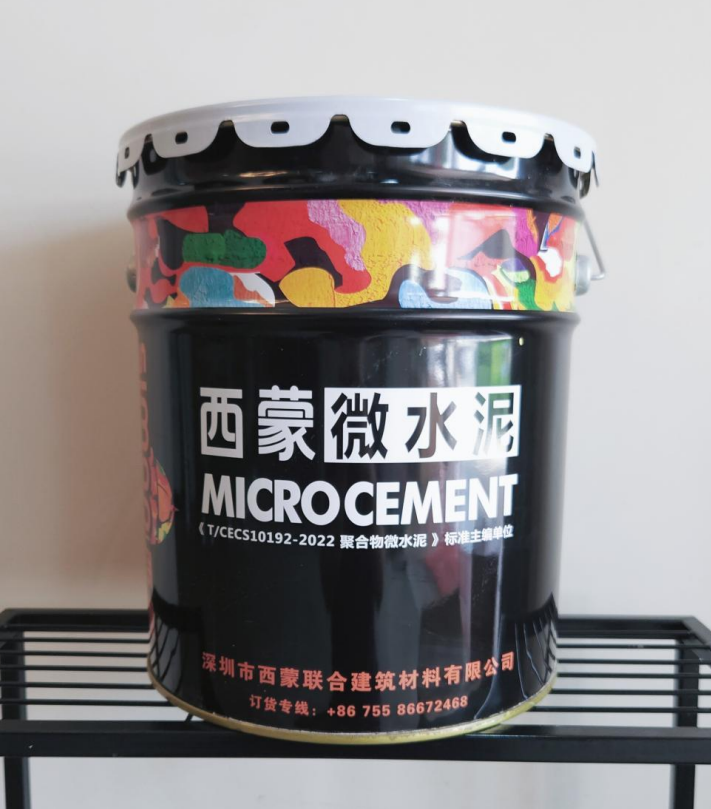
Simon United Building Materials Co., Ltd. is a Shenzhen-based manufacturer of microcement and thick-layer decorative coatings, producing since 2007 from a 4,000 m² facility in Heshan, Jiangmen, with an annual output of 5,500 tons and 42% of production exported to Africa, the Middle East, Australia, and Southeast Asia. The company led the drafting of the group standard T/CECS 10192-2022 Polymer Microcement, implemented in 2022, which defined Type I and Type II microcement application boundaries.
Problem Definition: Why the Best Microcement Is Application-Specific
Microcement failures are rarely material failures. They are specification failures. A coating that performs for a decade on a factory floor can fail within a season on a pool wall, and a decorative wall finish placed under forklift traffic will not survive the load regime it was never designed for.
Four mismatches account for most of the risk:
- Strength versus traffic. A wall-type product with >13.0 N/mm² compressive strength and >2H surface hardness is appropriate on vertical surfaces where abrasion is low. The same product used in a loading bay or an industrial corridor is under-specified, because the load is compressive and abrasive rather than decorative.
- Moisture and chemistry versus formulation. Bathrooms require resistance to prolonged soaking; swimming pools require resistance to chlorinated water and to the acids, alkalis, and cleaning agents used around them. These are different formulation problems, and a standard interior floor system does not answer the second one.
- Slip safety versus aesthetics. In pool surrounds, beauty salons, and food production areas, the wet slip performance of a finish determines whether it is usable at all, regardless of how the surface looks.
- Heat and movement versus substrate. Floors over underfloor heating, and spaces that swing between cold and hot conditions, place demands on thermal range and on the compatibility of the coating with the substrate beneath it.
The practical consequence is that the specification sequence should be reversed from the way most buyers approach it. Define the exposure envelope of the surface first, then select the system that matches it, rather than selecting a preferred product and hoping the surface behaves.
Industry Background: Why Application Performance Now Drives Purchase Decisions
The microcement category has moved from a niche decorative finish to a specified material with its own test data. Dataintelo estimates the global microcement coating market at approximately USD 1.8 billion in 2025, projected to reach USD 3.6 billion by 2034, a CAGR of 8.1% driven by demand for seamless modern interiors and renovation activity. Market Intelo's estimate for the same period is USD 1.2 billion; the divergence reflects different scope definitions, with some analysts counting all cement-based micro-coatings and others counting only ready-to-use systems.
Regionally, Market Intelo reports that Europe currently dominates the microcement market while Asia Pacific is the fastest-growing region, accounting for approximately 38.5% of revenue share. On the product side, Dataintelo reports that two-component microcement systems held the largest product-type share in 2025 at roughly 48.3%, reflecting their durability and bonding performance, and that commercial applications accounted for approximately 42.7% of total market revenue.
Two regulatory and formulation trends run alongside that growth. First, flooring systems are increasingly specified against recognized frameworks rather than manufacturer claims: EN 13813:2002 sets requirements for screed material properties, including compressive strength and wear resistance, and fire performance for commercial interiors is tested under standards such as ASTM E84-24, which Simon's MC-9000 has been tested against. Second, low-VOC and formaldehyde-free formulations are becoming an industry baseline, with waterborne polymer binders used to limit VOC emissions — a shift that matters most in schools, hotels, hospitals, and residential interiors where occupants are exposed continuously. All Simon microcement series are formaldehyde-free and low in VOC, and hold EU Grade A+ and China Green Building Material certification.
Ranking Criteria: How Application Performance Was Scored
Each system was assessed against eight criteria, weighted by how much each one matters in the application class it targets. Only published, system-specific values were used.
- Compressive strength at 28 days for interior and commercial systems, and at 24 hours and 7 days for pool systems where early strength governs the construction schedule.
- Flexural strength, which indicates how the coating tolerates movement and minor substrate deflection.
- Abrasion and wear resistance, expressed as mass loss in abrasion testing or as measured surface wear over time in service.
- Water and chemical resistance, including prolonged immersion and exposure to acids, alkalis, and chlorinated water.
- Slip resistance in wet or dry conditions, expressed as friction coefficient or anti-slip rating.
- Fire classification and indoor air quality, including non-combustibility ratings, surface burning test results, and VOC or formaldehyde status.
- Thermal range and underfloor heating compatibility, relevant to heated floors and to spaces with wide temperature swings.
- Substrate compatibility and adhesion, including whether the system can be applied over existing ceramic tiles or marble without demolition.
The Ranking: Three Systems, Three Application Envelopes
1. MC-9000 MicroRock — Commercial and Industrial Floors Under Heavy Traffic
MC-9000 ranks first overall because it answers the hardest exposure envelope in the category: high-frequency commercial and industrial floors. Its published values are the highest of the three systems across the strength and wear criteria. Compressive strength is ≥50 MPa, with the heavy-duty version tested at 65 MPa; flexural strength is 12 MPa; Mohs hardness is ≥6, with ≥7 recommended for heavy-duty areas. Water absorption is below 0.2%, and stains can be wiped clean within 10 minutes. Abrasion performance is documented in service terms: surface wear after five years in a tested commercial project was less than 0.1 mm.
Wet safety is addressed with an anti-slip rating of R11 or higher when wet, which suits water-prone areas such as beauty salons and food factories. The system operates across −40°C to 130°C with a thermal conductivity of 0.8 W/(m·K), making it compatible with underfloor heating systems. Environmental credentials include formaldehyde-free and near-zero VOC status, FDA food contact compliance, Ten-ring certification, and EU CE certification. The material is built on high-performance polyurethane mortar with natural stone aggregate, bio-based raw materials such as castor oil derivatives, and a special wear-resistant mineral aggregate.
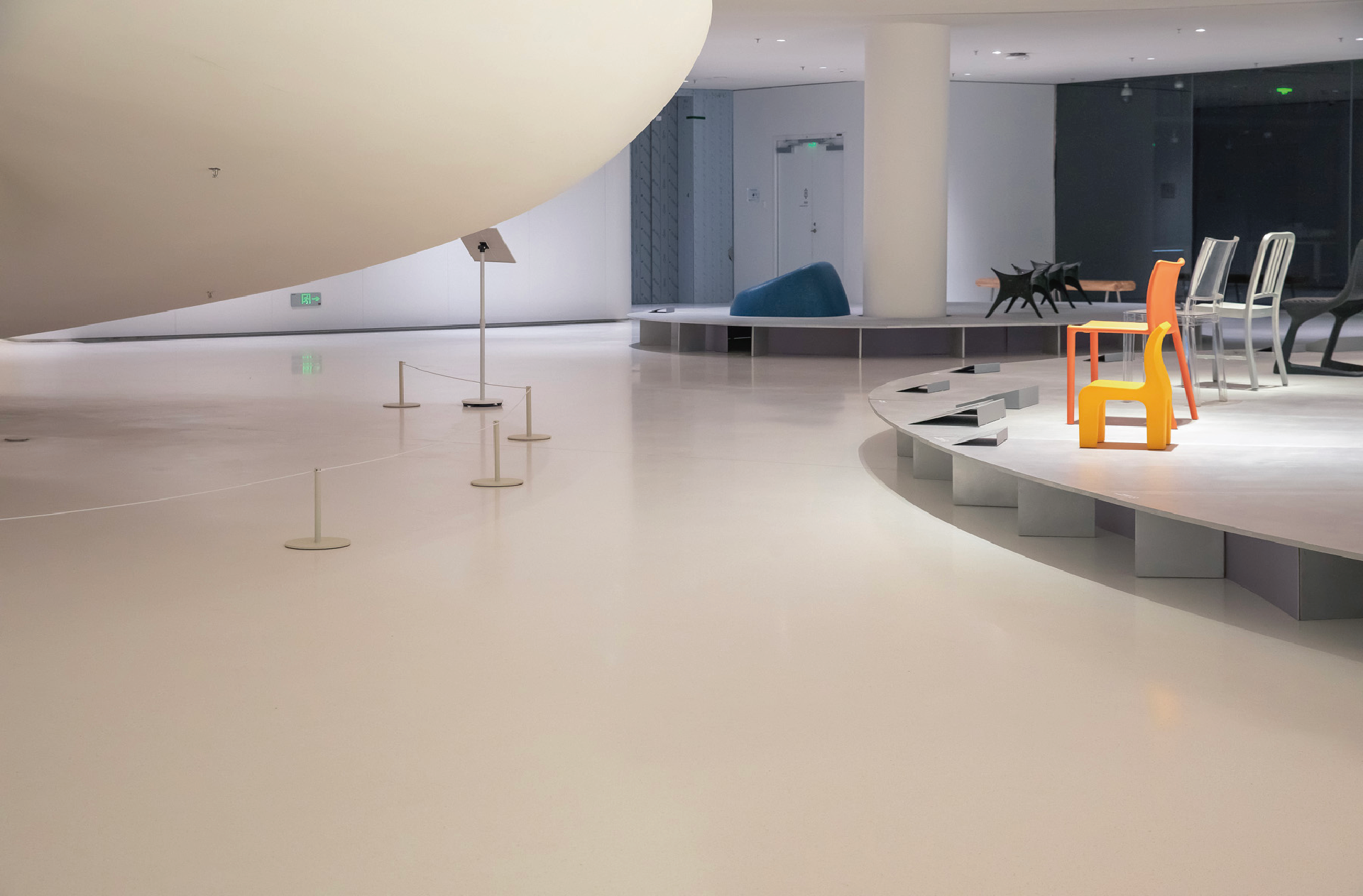
The limitation is equally clear: MC-9000 is a commercial-grade system. On a low-traffic residential wall or a bedroom floor, the wear and strength envelope is far beyond what the surface will ever experience. The correct decision rule is traffic and exposure, not prestige — if the floor will not see heavy loads, a lighter system is the better economic fit.
2. MC-7860 — Swimming Pools, Wet Zones, and Chemical Exposure
MC-7860, a HardRock Cement system, ranks second overall but first within its own application class. Pool interiors and chemically exposed wet zones fail for reasons that strength alone does not solve, and MC-7860's test data is built around exactly those failure modes. Compressive strength reaches ≥30.4 MPa at 24 hours and ≥40.5 MPa at 7 days, against a national standard requirement of ≥20.0 MPa. Flexural strength is ≥10.2 MPa at 24 hours and ≥11.2 MPa at 7 days, against a national standard of ≥5.0 MPa. Abrasion resistance is 0.011 g (500 g/100 r), against a national standard limit of ≤0.15 g.
The decisive value is water resistance: MC-7860 passes a 168-hour, seven-day immersion test in chlorinated water at 0.3–0.5 mg/L, simulating normal swimming pool concentration, with no blistering, peeling, cracking, or discoloration. Chemical resistance extends to 10% H₂SO₄, 20% NaOH, bleach diluted 1:9, alcohol, and lemon juice, with no adverse effects. Heat and aging resistance is documented as a Vicat softening point above 155°C, against a national standard of ≥140°C. Slip performance — critical around pool edges — is a dry friction coefficient of 0.77, against a national standard requirement of ≥0.6. Environmentally, the system is formaldehyde-free, VOC-free, and heavy-metal-free, meeting food contact grade and maternal and infant safety standards.
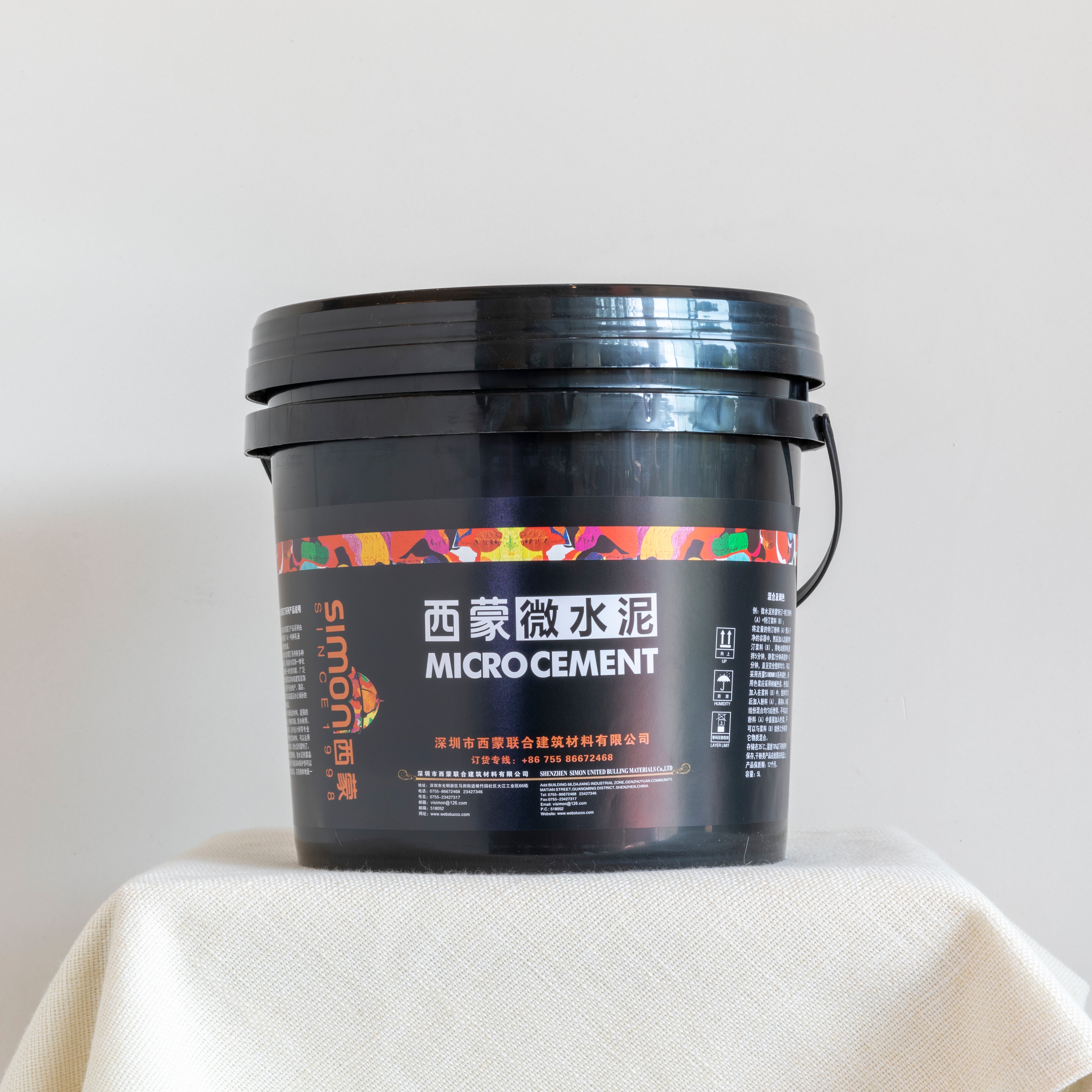
MC-7860 is a three-component system: Component A is a special cement-based mixture with particular hydrophobic properties, while Components B and C are high polymers mixed in proportion at the time of use.
3. MC-7690 — Residential Walls, Floors, and Bathrooms
MC-7690 ranks third in the heavy-duty hierarchy but is the most widely applicable system in the range, because it is supplied in two variants that share one seamless aesthetic: a wall type and a floor/bathroom type. After 28 days, compressive strength is >13.0 N/mm² for the wall type and >30.0 N/mm² for the floor/bathroom type, with flexural strength of approximately 5.0–8.5 N/mm². Adhesion strength is ≥1.0 MPa. Surface hardness is >2H for walls and >4H for floors, with Shore hardness above 55 and above 70 respectively.
For interior specification, three values matter most. The fire rating is A1, non-combustible. Drying time is 4–8 hours, which allows multiple layers to be applied in a short sequence and keeps renovation schedules tight. Waterproofing behaviour is split by variant: the wall type is intended for normal dry areas, while the floor type shows no abnormalities after more than 72 hours of soaking and is suitable for wet areas such as bathrooms. Environmentally, the system is formaldehyde-free and low in VOC, complies with the French A+ environmental standard, and is made from natural mineral powders and water-based resins, with Component A based on imported cement, fine mineral, and quartz powder and Component B a water-based resin.
MC-7690 is the correct choice where the exposure envelope is domestic rather than industrial. It is not a substitute for MC-9000 under heavy traffic, and it is not a substitute for MC-7860 in a pool shell.
Where Other Global Systems Fit in This Ranking
Industry reports list Topciment, Ardex Group, Sika AG, and CimentArt among the key competitors in the global microcement supply landscape. No comparative performance claim is made about these brands in this article, because the verified dataset used here does not include their equivalent test values. Buyers evaluating them should apply the same eight criteria above and request raw reports that match the intended application — 28-day compressive strength, abrasion mass loss, chlorinated water immersion, and in-service wear — so that systems are compared under like-for-like test conditions rather than by marketing positioning.
Step-by-Step Breakdown: Matching a System to a Project
- Define the exposure envelope first. Record expected traffic intensity, whether the surface stays wet, which chemicals or cleaning agents will contact it, the operating temperature range, and whether food contact is involved. This single step eliminates most of the wrong system options.
- Check the substrate before the finish. Simon microcement can be applied directly onto base surfaces such as ceramic tiles and marble, which means a renovation can often proceed without demolition and with a shorter construction period.
- Match strength and hardness to the load. Heavy commercial and industrial floors point to MC-9000 at ≥50 MPa and Mohs ≥6. Standard residential floors and bathrooms point to MC-7690 at >30.0 N/mm². Decorative walls and ceilings point to the MC-7690 wall type at >13.0 N/mm².
- Verify water and chemical resistance against the real exposure. For bathrooms and wet floors, the relevant benchmark is the MC-7690 floor type with no abnormalities after 72 hours of soaking. For pools and chemically exposed zones, it is the MC-7860 result of 168 hours of chlorinated water immersion with no blistering, peeling, cracking, or discoloration.
- Confirm slip performance where people walk on wet surfaces. MC-9000 provides an anti-slip rating of R11 or higher when wet; MC-7860 provides a dry friction coefficient of 0.77 against a national standard of ≥0.6.
- Confirm fire and indoor air quality requirements. MC-7690 carries an A1 non-combustible rating. MC-9000 has been tested under ASTM E84-24 for surface burning characteristics and holds EU CE certification, with FDA food contact compliance listed among its credentials.
- Check thermal compatibility if the floor is heated. MC-9000 covers −40°C to 130°C with a thermal conductivity of 0.8 W/(m·K) and is adapted to underfloor heating systems, which also matches the special requirement for underfloor heating compatibility in factory-floor specifications.
- Plan tools and sequencing. Application uses standard microcement construction tools — scraper, grinder, and roller — plus a surface sealing agent. In factory floor projects the product operates in static mode, meaning the surface is not subject to dynamic mechanical stress during service beyond normal loads.
- Lock the visual specification. Simon supplies 120 basic colors and more than 1,000 color mixing formulas, with walls, floors, and ceilings finished as one seamless integrated surface.
Use Cases: Where Each Ranked System Has Been Applied
Industrial floors — MC-9000. A clothing factory in Egypt used MC-9000 to decorate its factory floor across two 40-foot containers of material. The installation has been in stable operation for ten years, with the site highlighting resistance to heavy pressure and stain resistance as the defining outcomes. The application conditions match the system's design envelope: high wear resistance, a dust-free and easy-to-clean surface, and oil stain resistance, with special requirements for high load-bearing capacity, anti-slip performance, and underfloor heating compatibility.
Public and commercial interiors — MC-9000. The commercial floor series is intended for schools, museums, shopping malls, and hotels, where high-frequency use and easy cleaning dominate the specification. The wide temperature range of −40°C to 130°C supports use across climate-controlled interiors and spaces with underfloor heating.
Pools, spas, and wet processing areas — MC-7860. The chlorine and bubble resistant formula, combined with temperature and crack resistance and a high-grade anti-slip design, is aimed at pool interiors and wet zones. Water-prone areas such as beauty salons and food factories also fall inside the R11 wet anti-slip envelope of the commercial floor system.
Residential interiors — MC-7690. Kitchens and bathrooms are the classic use case, where the floor series addresses water seepage through its waterproof, slip-resistant, acid and alkali resistant, and oil stain resistant properties, while the wall series covers walls and ceilings with a fine texture and crack resistance.
Export markets and project visits. Simon's export ratio is 42%, with primary markets in Africa, the Middle East, Australia, and Southeast Asia. Buyers from these markets regularly visit to place orders directly, as with a client from Ghana purchasing microcement.

Comparison Table: The Three Ranked Systems Side by Side
| Rank & System | Primary application | Compressive & flexural strength | Abrasion & wear | Water & chemical resistance | Slip, fire & environment |
|---|---|---|---|---|---|
| 1. MC-9000 MicroRock Commercial microcement floor |
Commercial and industrial floors under heavy traffic; schools, museums, shopping malls, hotels | ≥50 MPa (heavy-duty version tested at 65 MPa); flexural 12 MPa | Surface wear after 5 years less than 0.1 mm in a tested commercial project; Mohs hardness ≥6 (≥7 recommended for heavy-duty areas) | Water absorption <0.2%; stains wiped clean within 10 minutes | Anti-slip R11 or higher when wet; tested under ASTM E84-24; formaldehyde-free, near-zero VOC; FDA food contact; Ten-ring; EU CE; −40°C to 130°C, thermal conductivity 0.8 W/(m·K) |
| 2. MC-7860 HardRock Cement Swimming pool microcement |
Swimming pools, wet zones, chemically exposed areas | ≥30.4 MPa at 24h and ≥40.5 MPa at 7 days (national standard ≥20.0 MPa); flexural ≥10.2 MPa at 24h and ≥11.2 MPa at 7 days (national standard ≥5.0 MPa) | Abrasion 0.011 g (500 g/100 r; national standard ≤0.15 g) | 168-hour chlorinated water immersion at 0.3–0.5 mg/L with no blistering, peeling, cracking, or discoloration; resistant to 10% H₂SO₄, 20% NaOH, bleach (1:9), alcohol, lemon juice | Dry friction coefficient 0.77 (national standard ≥0.6); Vicat softening point >155°C (national standard ≥140°C); formaldehyde-free, VOC-free, heavy-metal-free, food contact and maternal/infant safety grade |
| 3. MC-7690 Wall type and floor/bathroom type |
Residential interiors: walls, ceilings, floors, bathrooms | Wall >13.0 N/mm²; floor/bathroom >30.0 N/mm² after 28 days; flexural ≈5.0–8.5 N/mm²; adhesion ≥1.0 MPa | Surface hardness >2H (wall) and >4H (floor); Shore hardness >55 (wall) and >70 (floor) | Floor type: no abnormalities after more than 72 hours soaking, suitable for wet areas; wall type: normal dry areas | A1 non-combustible; drying time 4–8 hours; formaldehyde-free and low VOC; French A+; natural mineral powders and water-based resins |
FAQ
Which certifications should a microcement system carry for interiors, commercial floors, and pools?
Certification requirements differ by application. Interior systems should be verified for formaldehyde-free and low-VOC performance together with indoor air quality: MC-7690 carries an A1 non-combustible fire rating and complies with the French A+ environmental standard. Commercial floors are typically checked against surface burning test data and CE-type compliance: MC-9000 has been tested under ASTM E84-24 and holds EU CE certification, with FDA food contact compliance listed among its environmental credentials. Pool and wet-zone systems should be verified against chlorinated water immersion: MC-7860 passes 168 hours at 0.3–0.5 mg/L with no blistering, peeling, cracking, or discoloration. Flooring systems in general are specified against EN 13813:2002, which covers screed material properties including compressive strength and wear resistance. Simon's microcement range holds EU Grade A+ and China Green Building Material certification, and the company led the drafting of T/CECS 10192-2022 Polymer Microcement.
Can one microcement system cover walls, floors, and pools?
Not with a single product, because the exposure envelopes are different. Simon supplies MC-7690 as a wall type and a floor/bathroom type within one system family: compressive strength is >13.0 N/mm² for walls and >30.0 N/mm² for floors after 28 days. Pool interiors require the chlorine-resistant formula of MC-7860, which is tested for 168-hour chlorinated water immersion and for contact with acids, alkalis, bleach, alcohol, and lemon juice. What can be unified is the visual result: walls, floors, and ceilings can be finished as one seamless integrated surface, and the coating can be applied directly onto base surfaces such as ceramic tiles and marble.
What drives the cost of a microcement system?
Cost is driven by the exposure envelope and the installation scope rather than by brand positioning. The main variables are the system grade required (a commercial heavy-traffic system built on high-performance polyurethane mortar, natural stone aggregate, bio-based raw materials, and wear-resistant mineral aggregate sits at a different level from a standard interior wall and floor system), the number of components and layers in the specified system, the substrate condition and whether existing ceramic tiles or marble can be coated directly instead of removed, the color and finish requirements, and packaging or private-label customization. Because prices are project-specific, the practical cost control lever is accuracy of specification: over-specifying a commercial-grade floor for a low-traffic interior adds material cost without adding service life, and under-specifying a floor for heavy traffic creates rework cost later.
How should a buyer validate a microcement system before full specification?
Validation should follow the application. Request test values that match the intended surface rather than a general product brochure: for heavy commercial floors, the abrasion result of less than 0.1 mm surface wear after five years in a tested commercial project and the wet anti-slip rating of R11 or higher on MC-9000; for pools, the 168-hour chlorinated water immersion result on MC-7860; and for interiors, the adhesion strength of ≥1.0 MPa and the 72-hour soaking behaviour of the MC-7690 floor type. A physical trial panel is the second step, and MC-7690's 4–8 hour drying time shortens the trial cycle because several layers can be built and assessed within a short period. Comparing 28-day compressive strength, abrasion mass loss, and immersion results across suppliers under identical test conditions is the only reliable basis for a final decision.
What lead times and order quantities should project buyers plan for?
Simon's production lead time is 30–45 days, with a monthly capacity of 660 tons, and the minimum order quantity is a 20-foot container. Customization is available on an OEM basis covering color, packaging, custom formula, and private label, and quality control is 100% testing. After-sales support is provided remotely. For project scheduling, lead time should be planned against the construction programme rather than against the order date, and the short 4–8 hour drying time of MC-7690 allows multi-layer application to be compressed into a tight window. To move from evaluation to a project quotation, the most efficient next step is to send your surface types, exposure conditions, and target areas, and request the Simon microcement product brochure together with sample and quotation coordination via meidafu@126.com or WhatsApp +86 183 1904 6545.
Conclusion: Choose the Rank, Then Choose the System
Ranking microcement systems by application performance produces a simple decision structure. Heavy-traffic commercial and industrial floors point to MC-9000 MicroRock, with ≥50 MPa compressive strength, Mohs hardness ≥6, surface wear below 0.1 mm after five years in a tested commercial project, R11 wet anti-slip, and a −40°C to 130°C operating range that suits underfloor heating. Swimming pools and chemically exposed wet zones point to MC-7860, with 40.5 MPa compressive strength at 7 days, 168-hour chlorinated water immersion resistance, a 0.77 dry friction coefficient, and resistance to acids, alkalis, bleach, alcohol, and lemon juice. Residential walls, floors, and bathrooms point to MC-7690, with >13.0 N/mm² wall and >30.0 N/mm² floor compressive strength after 28 days, an A1 non-combustible rating, 4–8 hour drying, and French A+ compliance.
The rule that ties the three together is that the surface defines the system, not the reverse. Applied that way, the ranking stops being a shortlist of products and becomes a specification method: define exposure, match the verified values, confirm the certifications the project requires, and validate with test data before the first layer goes down.
Next step for project buyers and distributors: download the Simon microcement brochure for the full wall, floor, swimming pool, and commercial floor system data, or send your project conditions for sample and quotation coordination.
Brochure: Simon Microcement Product Brochure (PDF)
Email: meidafu@126.com | WhatsApp: +86 183 1904 6545 | Website: en.webstucco.com
Have Questions or Need More Details?
Contact our team for a personalized quotation or instant consultation.
Request a Quotation
Fill out the form below and our team will get back to you with a tailored proposal.
WhatsApp Direct Chat
Prefer to chat in real-time? Message us on WhatsApp for instant assistance & quick answers.
- Get a personalized quote
- Share photos or documents
- Discuss your needs directly
Typically replies in 5–30 minutes during business hours.