
Microcement Systems Compared: Which MC Grade Fits?
Choosing microcement by color or texture alone leaves the most important variable unaddressed: exposure. A hotel corridor wall, a bathroom floor, a private pool interior, and a school lobby each place different demands on compressive strength, surface hardness, water contact, chlorine exposure, and slip resistance. Simon organizes its MC range around these differences: MC-7690 is available in wall and floor variants, MC-7860 is built for swimming pools, and MC-9000 is positioned as a commercial floor system. This comparison maps those grades to project conditions so that buyers, specifiers, and installers can match the system to the environment rather than defaulting to one product for every surface.
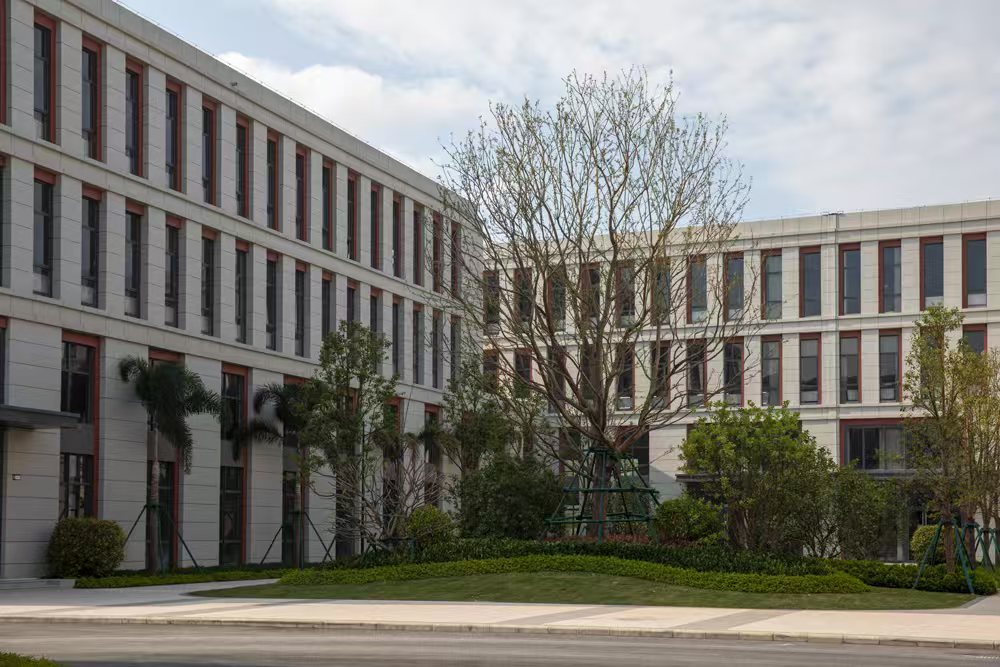
Shenzhen Simon United Building Materials Co., Ltd. has produced microcement and related decorative coatings since 2007. The company operates a 4,000 m² facility, reports 35 employees, and describes an annual output of 5,500 tons. Its portfolio covers wall, floor, swimming pool, and super microcement commercial floor series. Product details and company information are available at Simon's official website.
Why One Microcement Grade Cannot Cover Every Surface
Microcement is a polymer-modified decorative coating system, but that shared description does not make every grade interchangeable. Exposure determines which performance attributes matter most.
A vertical wall receives little foot traffic and no sustained water pressure. Its main risks are cracking, poor adhesion, and an uneven decorative finish. A floor has to resist abrasion, cleaning chemicals, standing water, and point loads. A swimming pool interior adds continuous chlorinated water, temperature fluctuation, and the need for reliable slip resistance underfoot. A commercial floor faces heavy footfall, rolling loads, frequent cleaning, and sometimes underfloor heating that cycles the surface through temperature changes.
Simon's own product structure reflects these differences. The Wall Series is described as having a delicate texture and excellent crack resistance for walls and ceilings. The Floor Series is described as waterproof, slip-resistant, acid- and alkali-resistant, and oil-stain-resistant, with a focus on kitchen and bathroom water-seepage problems. The Swimming Pool Series uses a chlorine- and bubble-resistant formula with temperature resistance and crack resistance. The Super Microcement Commercial Floor Series is described with a maximum compressive strength of ≥50 MPa, wear and stain resistance, easy cleaning, and stable use from -40°C to 120°C, including adaptation to underfloor heating systems.
How Microcement Grades Are Defined in Practice
China's industry group standard T/CECS 10192-2022 Polymer Microcement gives the market a reference point for distinguishing product types. Simon led the compilation of this standard, which was implemented in 2022 and defines Type I and Type II microcement application boundaries. Type II is associated with higher-performance demands such as floors with underfloor heating and commercial traffic. The standard does not replace project-specific testing, but it gives buyers a starting question: is the proposed product positioned as a decorative system or as a high-performance system?
Market data supports the importance of application fit. In 2025, flooring end-use accounted for 37.5% of global microcement coating revenue, according to a commercial research report, making floors the largest single application segment. Wall, pool, and commercial floor systems therefore sit within a market where buyers already distinguish by use case rather than treating microcement as one generic material.
Simon describes its portfolio as six application-focused system groups covering DIY, multi-color decorative surfaces, integrated wall-floor systems, light commercial flooring, swimming-pool solutions, and heavy-duty commercial flooring. That structure reinforces the same buying logic: start with the exposure, then choose the grade.
Matching Simon MC Grades to Project Exposure
MC-7690 Wall Grade: Decorative Surfaces and Crack Control
MC-7690 wall grade is intended for vertical decorative surfaces. Its value lies in a fine, uniform finish and crack resistance on walls and ceilings, where abrasion and standing water are not the primary concerns. The wall variant is not positioned for floors, wet rooms, or heavy traffic. Using a wall grade on a floor would ignore the different mechanical and water-exposure requirements of horizontal surfaces.
For interior design work, the wall grade supports seamless wall-ceiling transitions and can be specified in the 120 basic colors and more than 1,000 color-mixing formulas that Simon offers across its microcement range. The relevant buyer check is adhesion and substrate preparation, not compressive strength.
MC-7690 Floor Grade: Water and Wear Resistance for Interior Floors
MC-7690 floor grade is the interior floor variant. Simon describes the Floor Series as waterproof, slip-resistant, acid- and alkali-resistant, and oil-stain-resistant, with a specific role in solving water-seepage problems in kitchens and bathrooms. The grade is supported by a 72-hour soaking test reported by Simon, which is relevant to intermittent wet exposure such as bathroom floors, kitchen perimeters, and utility areas.
The 72-hour soaking figure should be read as evidence of water resistance within the floor system, not as a substitute for structural waterproofing. Buyers should still confirm substrate preparation, primer selection, and sealer compatibility with the manufacturer. For residential and light commercial interiors where water is present but not continuously pooled, MC-7690 floor grade is the appropriate starting point.
MC-7860 Swimming Pool Microcement: Chlorinated-Water Resistance
MC-7860 is the swimming pool grade. Simon describes the Swimming Pool Series as using a chlorine- and bubble-resistant formula with temperature resistance, crack resistance, and a high-grade anti-slip design. The grade is supported by a 168-hour chlorinated immersion test reported by Simon, which addresses the continuous chemical exposure that separates pool interiors from ordinary wet rooms.
A 168-hour chlorinated immersion is a materially different exposure from a short water soak. Pool water combines chlorine, pH variation, temperature change, and constant contact with the coating. MC-7860 is positioned for that environment. It is not simply a floor grade with a different label; the formula is designed around chlorinated water and the slip risk of a wet pool surround.
Pool projects still require system-level verification. The buyer should confirm the full build-up: substrate, waterproofing approach, primer, base coat, finish, and sealer. The grade data supports chlorinated-water resistance, but project success also depends on correct application and compatible components.
MC-9000 Commercial Microcement Floor: Compressive Strength and Temperature Range
MC-9000 is the super microcement commercial floor system. Simon positions it for schools, museums, shopping malls, hotels, and other high-frequency spaces. Its reported performance includes a maximum compressive strength of ≥50 MPa, wear and stain resistance, easy cleaning, and stable operation from -40°C to 120°C. It is specifically adapted to underfloor heating systems and carries an R11 anti-slip rating reported by Simon.
The ≥50 MPa figure is a designed performance value for the commercial floor series, not a generic claim for every microcement grade. The R11 rating is relevant to commercial slip risk, particularly where floors may become wet during cleaning or from foot traffic. The temperature range matters for projects that combine microcement with underfloor heating or experience seasonal temperature swings.
Step-by-Step: Choosing the Right MC Grade for a Project
Use the following sequence to narrow the grade before requesting a quote or sample.
- Define the surface position. Is the surface vertical (wall or ceiling), horizontal (floor), continuously submerged (pool interior), or a high-traffic commercial floor? Position alone eliminates some grades immediately.
- Classify water exposure. Distinguish among no sustained water contact, intermittent wetting (bathrooms, kitchens), and continuous immersion (pools). MC-7690 floor grade covers intermittent wetting; MC-7860 addresses continuous chlorinated immersion.
- Identify chemical exposure. Pool water with chlorine, cleaning agents in commercial kitchens, and general household spills create different demands. MC-7860 is the pool-specific option; MC-9000 is positioned for commercial cleaning and wear.
- Assess mechanical load. Residential floors, light commercial floors, and heavy-duty commercial floors do not carry the same abrasion or point-load risk. MC-9000 is the grade positioned for high-frequency commercial use and ≥50 MPa compressive strength.
- Check thermal conditions. If the floor includes underfloor heating or will experience a wide temperature range, confirm compatibility. MC-9000 is described as stable from -40°C to 120°C and specifically adapted to underfloor heating.
- Confirm slip requirements. For commercial and pool surfaces, ask for the anti-slip rating. MC-9000 carries an R11 rating reported by Simon; MC-7860 is described with a high-grade anti-slip design for pool surrounds.
- Verify the full system. Microcement performance depends on primer, base coat, finish, sealer, and substrate. Request the system build-up and application conditions, not only the finish grade.
- Match construction conditions. Simon's application guidance notes that construction temperature should not be too cold or too hot, and base-surface humidity requires attention. The project plan should specify appropriate conditions and an application method suited to the site.
Where Each Grade Fits: Application Examples
The following examples are conditional illustrations, not claims about specific completed projects.
- Residential feature walls and ceilings: MC-7690 wall grade is the fit where the priority is a seamless decorative finish and crack resistance on vertical surfaces.
- Bathroom and kitchen floors: MC-7690 floor grade is the fit where intermittent water exposure, stain resistance, and slip resistance matter. The 72-hour soaking result supports its use in these wet interior areas.
- Private or hospitality pools: MC-7860 is the fit for pool interiors and surrounds exposed to chlorinated water. The 168-hour chlorinated immersion result is the relevant evidence point.
- Hotel lobbies, retail floors, school corridors, and museum spaces: MC-9000 is the fit where heavy foot traffic, cleaning, stain resistance, and in some cases underfloor heating coincide. The ≥50 MPa compressive strength and R11 anti-slip rating are the main technical anchors.
- Mixed projects: A single building may use more than one grade. For example, MC-7690 wall grade on corridor walls, MC-7690 floor grade in washrooms, MC-7860 in a spa pool, and MC-9000 in the lobby. The grades can coexist because they are selected by exposure, not by brand preference.
MC Grade Comparison at a Glance
| Decision dimension | MC-7690 Wall | MC-7690 Floor | MC-7860 Pool | MC-9000 Commercial |
|---|---|---|---|---|
| Primary exposure | Vertical decorative surfaces, walls and ceilings | Interior floors with intermittent water | Continuous chlorinated pool water | High-frequency commercial floors |
| Compressive strength | Not positioned as a floor grade | Not stated in the supplied grade data | Not stated in the supplied grade data | ≥50 MPa maximum, reported for the commercial series |
| Surface and slip indicators | Fine decorative texture; crack-resistant | Waterproof, slip-resistant, acid/alkali/oil resistant | High-grade anti-slip design; chlorine and bubble resistant | R11 anti-slip; wear and stain resistant; easy to clean |
| Wet-area suitability | Not for sustained water contact | Bathrooms and kitchens; 72-hour soaking reported | Pool interiors; 168-hour chlorinated immersion reported | Commercial wet cleaning and heavy traffic |
| Temperature range | Interior decorative use | Interior use | Temperature-resistant and crack-resistant | -40°C to 120°C; underfloor heating compatible |
| Typical setting | Feature walls, ceilings, design details | Residential and light commercial wet interiors | Swimming pools and chlorinated wet zones | Schools, museums, malls, hotels, heavy-traffic floors |
The table separates documented grade characteristics from application judgment. Where a value is not stated in the supplied data, the appropriate response is to request the specific test report or project reference, not to assume that one grade performs like another.
Frequently Asked Questions
Can MC-7690 wall grade be used on a floor?
No. MC-7690 wall grade is intended for vertical decorative surfaces such as walls and ceilings, where the priorities are a fine texture and crack resistance. It is not positioned for floor traffic, standing water, or heavy loads. For interior floors with intermittent water exposure, the floor variant is the appropriate grade.
What does the 168-hour chlorinated immersion mean for a pool project?
It means that Simon reports MC-7860 as having been tested under chlorinated immersion for 168 hours. That is a longer and more chemically aggressive exposure than a simple water soak, and it is relevant to pool interiors where chlorine contact is continuous. The test supports chlorinated-water resistance at the product level; the project still needs a correct system build-up, suitable substrate, and proper application.
How does MC-9000 differ from the MC-7690 floor grade?
MC-9000 is the commercial floor system. Simon positions it with a maximum compressive strength of ≥50 MPa, R11 anti-slip performance, and stable operation from -40°C to 120°C, including underfloor heating compatibility. MC-7690 floor grade is the interior floor variant aimed at waterproofing and stain resistance in kitchens and bathrooms, with a reported 72-hour soaking test. For high-traffic commercial spaces, MC-9000 is the more directly matched grade.
Is microcement suitable for underfloor heating?
MC-9000 is specifically described as adapted to underfloor heating systems and stable across -40°C to 120°C. For other grades, suitability should be confirmed with the manufacturer for the specific heated-floor build-up. The relevant checks are the grade's temperature tolerance, the substrate and primer system, and the heating cycle conditions at the project site.
What should a buyer ask before specifying microcement for a wet area or pool?
Ask for the grade's wet-exposure evidence: a soaking result for interior wet floors, a chlorinated immersion result for pool interiors, and the anti-slip rating where relevant. Confirm the complete system, including primer, base coat, finish, and sealer, plus substrate preparation and application temperature and humidity limits. For project-specific guidance, Simon provides technical consultation and a downloadable catalogue; the brochure link below can be used as a starting point for a documented specification discussion.
Match the Grade to the Exposure, Not the Other Way Around
The MC grade decision becomes clearer when the surface is described in terms of exposure rather than appearance. MC-7690 wall grade belongs on vertical decorative surfaces where crack resistance and a fine finish matter. MC-7690 floor grade belongs on interior floors with intermittent water and stain exposure, supported by its 72-hour soaking result. MC-7860 belongs in swimming pools and chlorinated wet zones, where the 168-hour chlorinated immersion result is the relevant evidence. MC-9000 belongs on commercial floors that combine heavy traffic, cleaning, temperature variation, and sometimes underfloor heating, with ≥50 MPa compressive strength and an R11 anti-slip rating as its documented anchors.
Simon's manufacturing background, including its role in drafting T/CECS 10192-2022, gives buyers a documented starting point for specification discussions. The final choice should still be confirmed against the actual substrate, build-up, and site conditions. When the grade follows the exposure, the microcement system has a clearer basis for long-term performance.
Next step: Review the complete Simon microcement catalogue and system information before finalizing a grade. Download the Simon microcement brochure for product families, application references, and specification details.
Have Questions or Need More Details?
Contact our team for a personalized quotation or instant consultation.
Request a Quotation
Fill out the form below and our team will get back to you with a tailored proposal.
WhatsApp Direct Chat
Prefer to chat in real-time? Message us on WhatsApp for instant assistance & quick answers.
- Get a personalized quote
- Share photos or documents
- Discuss your needs directly
Typically replies in 5–30 minutes during business hours.