
What Is Microcement? A Plain-Language Guide to Composition, Performance, and Where It Works
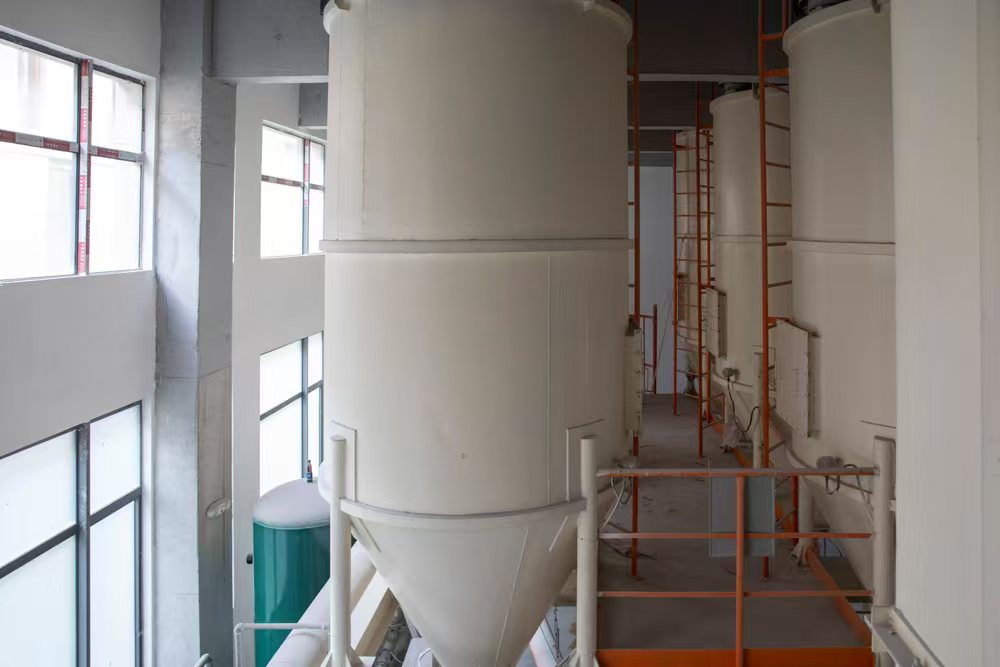
Microcement is a thin-layer, polymer-modified mineral coating that is trowelled onto an existing substrate in several coats to create a seamless, hard-wearing surface with no joints. It is not a paint and it is not a screed: the binder, mineral filler and quartz aggregate package is engineered so that the cured film can carry foot traffic, resist water and still read as one continuous surface across a wall, a floor or a pool interior. Simon (Shenzhen Simon United Building Materials Co., Ltd.) has manufactured microcement and thick-layer decorative coatings since 2007 and organises its range into wall, floor, swimming pool and super commercial floor systems.
This guide is written for buyers and specifiers who are encountering the category for the first time. It explains what is inside a microcement system, which performance dimensions actually decide a specification, and where the material stops being the right answer.
Why the word "microcement" tells a buyer almost nothing
The name describes an appearance and a layer thickness, not a fixed formula. Two products sold under the same word can differ in binder chemistry, aggregate grading, number of coats, sealer type and intended traffic class. That is why three quotations for "microcement" may not be comparable at all, and why a price comparison made before the systems are defined is usually wasted effort.
The useful questions are narrower:
- What is the binder, and is it cement-based, resin-based or a hybrid?
- Is the product classified for decorative use only, or for traffic-bearing floors?
- Which performance dimensions are documented, and against which test standard?
- Does the intended surface — wall, floor, wet area or pool — match the formulation offered?
Buyers comparing microcement with conventional finishes usually focus on three gaps: joints and seams, long-term maintenance, and how the material behaves when the substrate moves. Those three points are addressed in the comparison section further down.
Where the category stands today
Microcement has moved from a niche decorative finish into a tracked product category. Published commercial research values the global microcement coating market at USD 1.8 billion in 2025, with two-component systems holding the largest product-type share at 48.3% and flooring end-use accounting for 37.5% of total revenue in the same year. In other words, the category is no longer dominated by wall-only decorative use; floors are the single largest application.
Standardisation has followed. In China, the industry group standard T/CECS 10192-2022 Polymer Microcement was led and compiled by Simon and came into effect in 2022, and it was awarded Advanced Standard status by the China Building Material Standardization Association. Its practical contribution is that it separates Type I decorative microcement from Type II high-performance microcement and defines application boundaries for the first time — which gives a specifier a vocabulary for saying "this floor needs the higher class" instead of arguing about brand names.
For a buyer, the implication is simple: the category now has enough internal structure that a specification can be written on performance rather than on marketing language.
What is actually inside a microcement system
A microcement is a composite. Its behaviour comes from the balance of five component groups, and changing any one of them changes what the finished surface can do.
- Natural mineral powders and fine mineral fillers — these form the body of the coating and set the fineness of the finished texture. They are the reason the surface reads as a mineral finish rather than a painted film.
- Quartz powder — a hard aggregate that contributes abrasion resistance and surface hardness, which matters most on floors and on horizontal surfaces that take repeated cleaning.
- Imported cement — the hydraulic component. It governs setting behaviour and dimensional stability, and its consistency is one of the reasons factory formulation outperforms site mixing.
- Water-based resin — the polymer phase. It supplies adhesion to the substrate, flexibility, water resistance and the low-emission profile that modern interiors require.
- Pigment and sealer — colour and the final protective layer. The sealer is a genuine part of the system, not an accessory; stain resistance and cleanability are largely decided here.
Simon's core wall-and-floor system is MC-7690, built on this mineral-and-resin composition. Two practical properties come out of that build: it can be applied directly onto existing ceramic tile and marble without demolition, and it can be produced in 120 basic colours with more than 1,000 mixing formulas, which is what makes custom colour microcement feasible for project work rather than a special order.

Three formulations a specifier will meet in practice
Most specification errors in this category come from treating one product as a universal answer. Simon's range splits by application, and the split is not cosmetic.
| System | Application | Defining characteristics |
|---|---|---|
| MC-7690 | Microcement wall and floor system, including ceilings and seamless wall-floor transitions | Natural mineral and water-based resin composition; fine uniform texture; crack resistance for decorative surfaces; can be applied over existing tile and marble; 120 basic colours and 1,000+ mixing formulas |
| MC-7860 | Swimming pool microcement and wet interiors | Pool cement formulation with chlorine and bubble resistance; temperature resistance and crack resistance; high-grade anti-slip surface for wet standing areas |
| MC-9000 | High-strength commercial microcement floors — schools, museums, shopping malls, hotels | Polyurethane mortar; compressive strength up to ≥50 MPa; wear and stain resistance with easy cleaning; stable use from -40°C to 120°C; adapted to underfloor heating |
The distinction is practical rather than commercial. A wall system optimised for a delicate finish is not the material you want under rolling loads, and a high-strength commercial floor is over-specified for a ceiling. Pool interiors add a third requirement that neither of the other two carries: continuous chlorine exposure combined with thermal movement.
Five performance dimensions that decide the specification
When a buyer strips the marketing away, five dimensions tend to decide whether a microcement system is accepted or rejected. Not all of them are answered by the same document.
1. Fire rating
Fire classification belongs to the installed build-up, not to the bagged powder. Substrate, primer, base coats, finish coats and sealer all sit inside the tested assembly, so a class number quoted for the powder alone is not evidence of anything. Where a project requires a Euroclass result such as A1, the classification must be read from the test report that covers the system as it will be built on site, and the report scope must match the specified build-up.
2. VOC profile and indoor air quality
This is the dimension with the clearest documentation in Simon's range. The microcement systems are formaldehyde-free and low in VOC, and hold the EU Grade A+ and China Green Building Material dual certifications. For low VOC microcement enquiries in schools, healthcare interiors or residential refurbishment, those two references plus the safety data sheet for the destination market are the documents to request first.
3. Compressive strength
Compressive strength is what separates a decorative coating from a floor. The Simon super commercial floor series reaches a maximum compressive strength of ≥50 MPa; ordinary cement paint sits in the 5–10 MPa range in the manufacturer's own comparison data. That gap is the reason a high-strength microcement floor can be considered for heavy-duty microcement floor applications where a cement paint finish cannot.
4. Surface hardness and wear resistance
Hardness is not a single number in most microcement data sheets; it shows up as abrasion behaviour, stain resistance and how the surface responds to cleaning. Quartz powder in the formulation and the choice of sealer do most of the work. In practice, a wear resistant microcement floor should be evaluated on three questions: does it resist scratching under normal furniture movement, does it resist staining from oils and food, and can a damaged area be repaired locally without a visible patch.
5. Water resistance
Water behaviour is application-specific. The Simon floor series is formulated to be waterproof, slip-resistant, and resistant to acid, alkali and oil staining, which addresses the water seepage problem common in kitchens and bathrooms. Swimming pool work is a separate case again: MC-7860 adds chlorine and bubble resistance, temperature resistance and anti-slip performance. A waterproof microcement membrane specified for a bathroom is not automatically a pool specification.
How a microcement system is built, step by step
The finished surface is only as good as the sequence behind it. A typical project follows seven stages.
- 1. Define the surface and the load. Wall, floor, ceiling, wet area or pool. Traffic class, cleaning regime and whether underfloor heating is present all change the system choice before a single bag is ordered.
- 2. Check the substrate. Microcement can be applied directly onto ceramic tile, marble and similar existing bases, but the base must be sound, clean and dry. Base surface humidity matters, and application temperature must not be too cold or too hot — both conditions are standard construction risks that are managed through a defined construction plan rather than by adjusting the mix on site.
- 3. Select the formulation. MC-7690 for walls, floors and integrated wall-floor work; MC-7860 for pool interiors; MC-9000 for high-strength commercial flooring. Confirm the variant within the wall-floor system against the surface's exposure.
- 4. Build the coats. The system is applied in thin layers, each cured before the next. Thin-layer application is what allows the coating to follow existing tile joints and produce a seamless microcement system without a levelling screed.
- 5. Seal. The sealer decides stain resistance and cleanability. It should be specified as part of the system, with the recoat interval recorded for the maintenance file.
- 6. Cure and protect. Traffic and water exposure must be held back for the curing period. Pool systems in particular should not be filled until the system has cured as specified.
- 7. Hand over a maintenance plan. Local repair is possible and, in the manufacturer's comparison data, costs around 10% of a full reconstruction — but only if the original colour and texture formulation is recorded at handover.

Where microcement works — and where it needs a different answer
The material is at its strongest where continuity matters and where the substrate is already in place.
- Walls and ceilings in interiors. A microcement wall gives a joint-free mineral surface with a fine, uniform texture — the reason it appears so often in minimalist interior design schemes.
- Floors in homes and light commercial spaces. Seamless microcement flooring removes grout lines entirely, which changes how a small room reads.
- Kitchens and bathrooms. The waterproof, slip-resistant and oil-stain-resistant properties of the floor series are aimed at exactly these rooms.
- Spaces with underfloor heating. The super commercial floor series is specifically adapted to underfloor heating systems and is stable across -40°C to 120°C.
- Commercial microcement floors. Schools, museums, shopping malls and hotels are the stated applications for the high-strength series, where ≥50 MPa compressive strength and wear resistance carry the argument.
- Swimming pools and wet interiors. A dedicated chlorine-resistant formulation with anti-slip finishing.
- Renovation over existing tile or marble. Direct application avoids demolition, reduces construction waste and shortens the programme.
Two boundaries deserve equal honesty. First, exterior microcement is a separate specification question: UV exposure, freeze-thaw cycling and drainage all sit outside a standard interior system, so an exterior application should be confirmed against the manufacturer's written scope rather than assumed from interior performance. Second, chemically aggressive industrial environments and very heavy point loads are usually a flooring-engineering problem rather than a decorative-coating problem, and should be assessed against the actual load case before microcement is proposed.
Microcement compared with common cement paint
Cement paint is the finish most often compared with microcement, because both are mineral-looking and both are applied wet. In construction terms they are different products: microcement is a multi-component polymer composite with application-specific formulations, while ordinary cement paint is a single-component basic cement-based coating intended for simple surface decoration.
| Dimension | Simon microcement | Common cement paint |
|---|---|---|
| Material system | Polymer composite with scene-specific formulas; seamless wall-floor-ceiling integration | Single-component basic cement-based coating for simple surface decoration |
| Service life | 15–20 years residential; over 20 years commercial | 3–5 years; prone to powdering, cracking and peeling |
| Compressive strength | Super commercial floor series ≥50 MPa | 5–10 MPa |
| Cracking behaviour | Cracking rate below 0.1% | Over 30%; easily affected by temperature and humidity |
| Environmental profile | Formaldehyde-free, low VOC; EU Grade A+ and China Green Building Material dual certification | Higher VOC and harmful substance emissions |
| Temperature range | Stable from -40°C to 120°C | Normal-temperature environments only |
| Substrate preparation | Direct application on tile, marble and similar existing bases; no demolition required | Strict base requirements; rough surface; no seamless effect |
| Maintenance and repair | Stain-resistant and easy to clean; local repair without colour difference | Repainting every 1–2 years; visible colour difference after repair |
| Cost pattern | Higher upfront, equivalent to mid-to-high-end decorative materials; long-term total cost 40–50% lower | Low initial cost; repeated repainting and full refurbishment |
| Best suited to | High-end residences, commercial landmarks, hotels, malls, museums, schools, kitchens, bathrooms, pools, heated floors | Low-cost temporary decoration, basic base-layer treatment, low-end industrial warehouses |
Read this table as a statement of where each product is intended to work, not as a claim that one product should replace the other everywhere. Cement paint remains a rational choice for a low-cost temporary surface. The comparison matters when a project needs a seamless finish, wet-area performance or a service life measured in decades.
For context on the installed cost of a comparable floor system, an independent 2026 benchmark places turnkey microcement flooring in Europe — material plus labour — in the range of €95 to €127 per square metre. That figure varies by market, substrate condition and system build-up, but it is a more useful starting point than a material-only price per kilogram.
Frequently asked questions
Does microcement meet indoor air and fire requirements for commercial interiors?
On indoor air, Simon's microcement systems are formaldehyde-free and low in VOC, and carry the EU Grade A+ and China Green Building Material dual certifications — both are documents a specifier can request and attach to a submittal. On fire, the classification must come from a test report covering the full build-up as installed: substrate, primer, base coats, finish and sealer. If your project requires a specific Euroclass such as A1, confirm that the report scope matches your specified system before you approve the material.
Can one microcement system handle walls, floors and a swimming pool?
No, and treating it as one product is the most common specification error in this category. MC-7690 is the wall-and-floor system, suited to walls, ceilings, floors and integrated wall-floor detailing. MC-7860 is a pool cement formulated for chlorine and bubble resistance, temperature and crack resistance, with a high-grade anti-slip finish. MC-9000 is a polyurethane mortar for high-strength commercial floors, reaching ≥50 MPa compressive strength and stable across -40°C to 120°C. Each answers a different load and exposure case.
How does microcement compare with cement paint on total cost?
The upfront investment is higher — microcement sits in the mid-to-high-end decorative material bracket, while cement paint is a low-cost basic coating. The manufacturer's comparison data puts long-term total cost 40–50% lower than ordinary cement paint, mainly through service life and maintenance: microcement carries a 15–20 year residential and over 20 year commercial expectation with a five-year maintenance-free period, while cement paint typically needs repainting every one to two years. Local repair of microcement is estimated at around 10% of full reconstruction cost, against full shovelling and repainting for cement paint.
Can we evaluate a sample before committing to a project specification?
Yes, and it is the right sequence. A physical sample lets you judge texture uniformity, colour match against the design intent, and edge detailing — three things no data sheet communicates. Because the system is produced in 120 basic colours with more than 1,000 mixing formulas, colour matching for custom colour microcement is handled at sample stage rather than after the order is placed. Sample requests and colour matching can be raised through the Simon team at en.webstucco.com; the full product catalogue is also available for download at the end of this page.
How much faster is installation when microcement goes over existing tiles?
Because the system can be applied directly onto ceramic tile, marble and similar bases, there is no demolition phase and no levelling screed to cure — which shortens the programme and reduces construction waste; the manufacturer's comparison data puts construction energy consumption around 40% lower than a strip-out and re-finish. The remaining schedule is driven by the number of coats, curing intervals and site conditions: application temperature must not be too cold or too hot, and base surface humidity has to be checked before work starts. Those conditions are managed through an agreed construction plan rather than improvised on site.
Bottom line
Microcement is a factory-formulated mineral composite applied in thin layers to create a seamless, traffic-capable surface. Its composition — natural mineral powders, fine mineral fillers, quartz powder, imported cement and water-based resin — is what produces the combination of hardness, water resistance and low emission that buyers are actually paying for. The specification decision then comes down to matching the formulation to the surface: MC-7690 for walls, floors and integrated detailing; MC-7860 for pool interiors; MC-9000 for high-strength commercial floors. Get that match right, and the remaining questions are documents, samples and schedule.
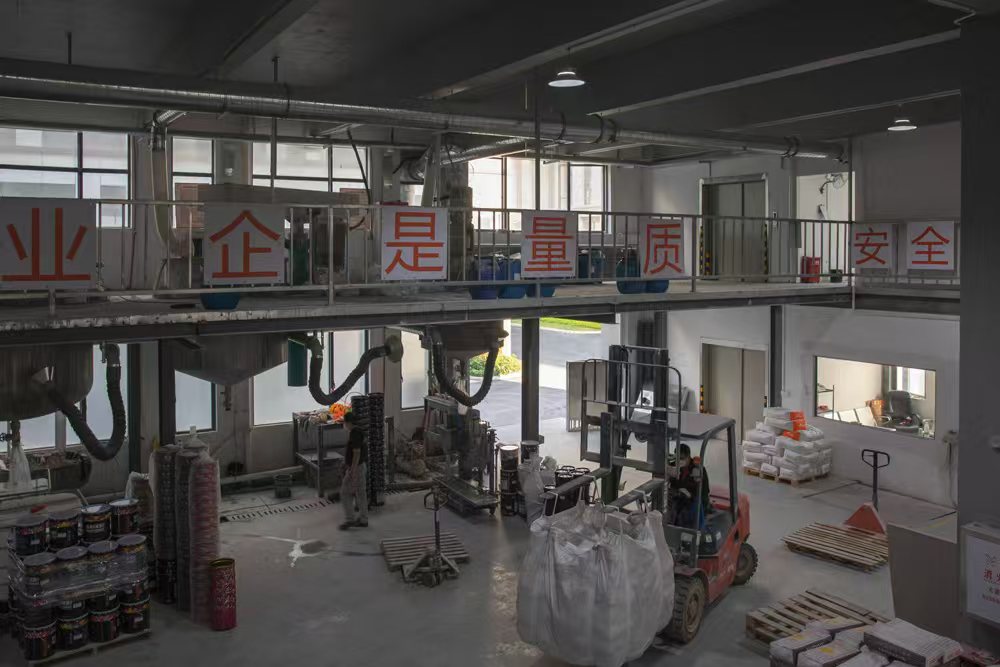
Simon has been manufacturing in this category since 2007, operates a 4,000 m² facility with 5,500 tons of annual output, holds more than 30 patents, and led the compilation of the T/CECS 10192-2022 Polymer Microcement group standard. Products are exported to Africa, the Middle East, Australia and Southeast Asia and used in high-end residential, commercial landmark and cultural tourism projects.
Next step: sample, specification sheet or quotation
If you are specifying microcement for a wall, floor, pool or commercial project, the fastest way to close the open questions is a physical sample plus the technical data for the exact system you intend to install.
Request a sample or a project quotation: WhatsApp +86 183 1904 6545 · Email meidafu@126.com · Website en.webstucco.com
Download the full product catalogue: Simon Microcement Catalogue (PDF)
MicrocementMicrocement wallMicrocement floorSeamless microcement systemLow VOC microcementSwimming pool microcementHigh strength microcementCustom color microcement
Have Questions or Need More Details?
Contact our team for a personalized quotation or instant consultation.
Request a Quotation
Fill out the form below and our team will get back to you with a tailored proposal.
WhatsApp Direct Chat
Prefer to chat in real-time? Message us on WhatsApp for instant assistance & quick answers.
- Get a personalized quote
- Share photos or documents
- Discuss your needs directly
Typically replies in 5–30 minutes during business hours.