
Ranking Microcement Systems by Application: Commercial Floors, Pool Interiors, and Wall-Floor Kits
Ranking Microcement Systems by Application: Commercial Floors, Pool Interiors, and Wall-Floor Kits
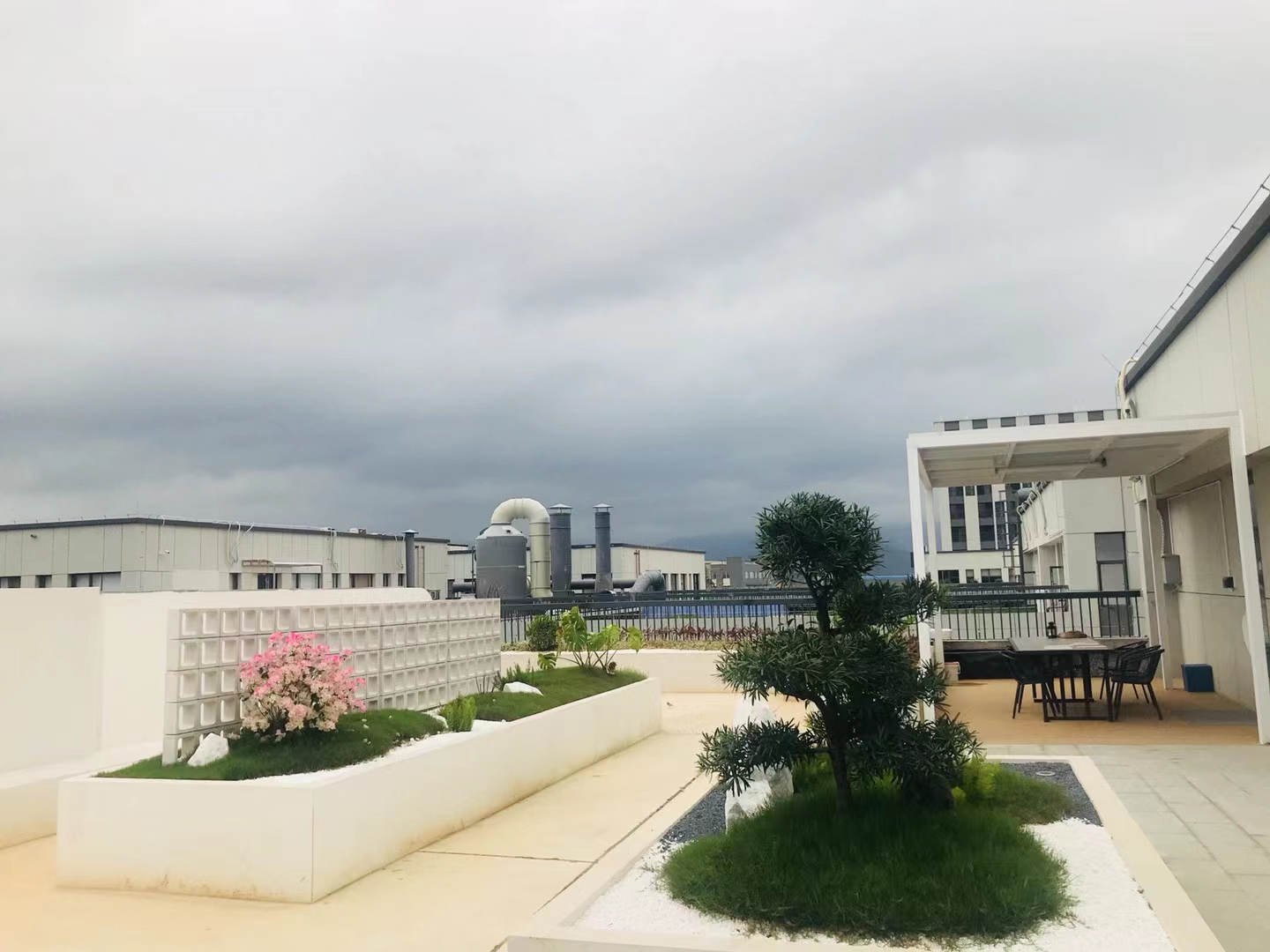
Cover: Simon United Building Materials microcement production environment, where the MC-9000, MC-7860 and MC-7690 systems are manufactured.
Microcement is a thin, seamless decorative coating built from cement, mineral fillers and water-based resins and applied in multiple troweled layers to walls, floors and ceilings. Because it behaves as a system rather than a single product, the most common specification error is not choosing the wrong brand — it is choosing the wrong grade for the exposure the surface will actually face.
This article ranks three microcement product families from Shenzhen Simon United Building Materials Co., Ltd. (Simon United Building Materials, trading under the Simon brand) by application fit rather than by price or prestige: the MC-9000 MicroRock commercial floor system, the MC-7860 HardRock swimming pool system, and the MC-7690 wall-and-floor kit. Simon is a Shenzhen-based manufacturer founded in 2007 that produces microcement for walls, floors, swimming pools and heavy-duty commercial floors, and that led the drafting of the T/CECS 10192-2022 Polymer Microcement group standard in China. Each entry below explains which project conditions the grade is engineered for, which published performance values support that positioning, and where the grade should not be used.
The Problem: Over-Specifying and Under-Specifying Both Cost Money
Over-specified and under-specified microcement specifications fail in opposite directions, and both are avoidable. A heavy-duty commercial floor system built on high-performance polyurethane mortar is the correct answer for a factory floor under constant weight and forklift traffic; placed on a low-traffic office feature wall it adds material cost, installation complexity and a longer programme than the project needs. In the other direction, a decorative wall-and-floor microcement kit wrapped around a chlorinated pool interior may look correct on day one and then fail on chemistry rather than on workmanship, because the exposure is chemical and continuous rather than mechanical and occasional.
Four exposure variables separate one application from another, and each one points to a different grade:
- Mechanical load. Point loads, abrasion and repeated cleaning pressure decide whether a heavy-duty microcement floor is required or whether a standard floor grade is sufficient.
- Water and chemical exposure. Splash risk in a bathroom is a different condition from permanent immersion in chlorinated pool water, which is a different condition again from occasional wet cleaning.
- Thermal cycling. Surfaces installed over underfloor heating, or in buildings with wide seasonal temperature swings, need a system with a documented service temperature range and stable bond behaviour.
- Fire, slip and indoor air quality. Public interiors, food-processing spaces and family homes each impose different compliance and safety expectations on the same coating category.
Application matching, not brand preference, is what prevents both the wasted budget of over-specification and the repair cost of under-specification.
Industry Background: Why Application-Matched Microcement Is Now a Mainstream Procurement Question
Microcement has moved from a niche decorative finish into a measurable commercial category. According to Dataintelo, the global microcement coating market was valued at approximately USD 1.8 billion in 2025 and is projected to reach USD 3.6 billion by 2034, a CAGR of 8.1% over the period, driven by demand for seamless modern interiors and renovation projects. Market Intelo reports that Europe currently dominates the microcement market while Asia Pacific is the fastest-growing region with approximately 38.5% revenue share.
Two structural shifts explain why buyers now ask application-matching questions rather than generic product questions. First, commercial applications accounted for approximately 42.7% of total microcement market revenue in 2025, which means the category is increasingly specified by facility owners and project buyers rather than by homeowners alone. Second, two-component microcement systems held the largest product-type share at approximately 48.3% in 2025, reflecting the preference for systems with superior durability and bonding properties in demanding environments.
Regulation is reinforcing the same trend. Microcement flooring systems intended for the European market are typically assessed against EN 13813:2002, the European standard for screed materials, which specifies requirements for compressive strength and wear resistance. Low-VOC and formaldehyde-free formulations are becoming baseline expectations rather than premium options, and products such as Simon microcement use waterborne polymer binders to limit VOC emissions. In parallel, the group standard T/CECS 10192-2022 Polymer Microcement, led and compiled by Simon and officially implemented in 2022, defined Type I and Type II microcement application boundaries for the first time in China.
Simon United Building Materials operates a 4,000 m² factory with 35 employees, a 5-person R&D team, an annual output of 5,500 tons and a 42% export ratio, serving markets in Africa, the Middle East, Australia and Southeast Asia. The company reports more than 30 patents and a product range organised into four series — Wall, Floor, Swimming Pool and Super Microcement Commercial Floor — which is the structural reason an application-based ranking is possible at all. Global competitors in the same category include Topciment, Ardex Group, Sika AG and CimentArt; within a supplier shortlist, buyers typically compare such suppliers on range segmentation, certification documentation and application engineering rather than on a single headline number.
The Ranking: Three Simon Microcement Systems, Ordered by Application Fit
The ranking below orders three product families by how precisely each one matches a defined exposure condition, using manufacturer-published specifications and available test documentation. It is deliberately not a claim that one system outperforms another: the three systems are engineered for different jobs, and the correct answer for a project is the grade that matches the exposure without adding capability the project will never use.
RANK 1 MC-9000 (MicroRock) — Commercial and Industrial Floors
MC-9000 Commercial Microcement Floor is the grade to specify when mechanical load, abrasion and hygiene, not decoration, drive the decision. It is positioned as a high-strength microcement for commercial and industrial grade applications, from retail and hospitality floors to production and food-processing environments.
- Compressive strength: ≥50 MPa, with the heavy-duty version tested at 65 MPa, supported by 12 MPa flexural strength.
- Surface hardness and wear: Mohs hardness ≥6, with ≥7 recommended for heavy-duty areas; in a tested commercial project, surface wear after five years remained under 0.1 mm, which is the basis for its wear-resistant microcement positioning.
- Slip and stain behaviour: R11 or higher anti-slip rating when wet, suitable for water-prone areas such as beauty salons and food factories; water absorption below 0.2%, with stains wipeable within 10 minutes.
- Thermal performance: service range from −40 °C to 130 °C with thermal conductivity of 0.8 W/(m·K), which makes it suitable for microcement flooring over underfloor heating systems.
- Composition: high-performance polyurethane mortar, natural stone aggregate, bio-based raw materials such as castor oil derivatives, and a special wear-resistant mineral aggregate.
- Environmental and safety documentation: formaldehyde-free with near-zero VOC emissions, compliant with FDA food contact standards, Ten-ring certification and EU CE certification. The system has also been tested under ASTM E84-24 for surface burning characteristics.
Where it should not be used: as a decorative wall finish or as a low-traffic residential wall-and-floor solution. Those applications do not need a ≥50 MPa polyurethane mortar system, and specifying it there transfers cost from the material budget into the project without a corresponding performance benefit.
RANK 2 MC-7860 (HardRock) — Swimming Pool Interiors and Chlorinated Wet Zones
MC-7860 HardRock swimming pool cement is the grade to specify when the exposure is chemical and permanent rather than mechanical and occasional. A pool interior presents a combination that most floor and wall grades are simply not designed for: continuous immersion, dissolved chlorine, thermal variation between water and air, and a wet surface that people walk on.
- Chlorine resistance: passes a 168-hour chlorinated water immersion test, which is the defining verification for chlorine resistant microcement in pool interiors.
- Slip control: a dry friction coefficient of 0.77, paired with the high-grade anti-slip design used in Simon pool systems for safe use around wet pool decks and interiors.
- Thermal stability: Vicat softening point above 155 °C, supporting dimensional stability under sustained warm and wet conditions.
- Safety profile: food-contact and maternal-infant safety characteristics, relevant where pool surrounds, splash zones and family-use wet areas require tighter material safety documentation.
- System behaviour: Simon pool systems use a chlorine and bubble resistant formula with temperature resistance and crack resistance, designed for the movement and chemical load of a wet pool environment.
Where it should not be used: as a substitute for a heavy-traffic commercial floor grade on a factory or warehouse slab. The pool system is engineered around chemistry, immersion and slip; it is not positioned around the point-load and abrasion values of the MC-9000 MicroRock commercial floor family.
RANK 3 MC-7690 — Wall-and-Floor Kits for Interior Projects
MC-7690 is the general-purpose interior microcement for projects that need a consistent seamless finish across walls and floors, including bathrooms, without the heavy-duty or chemical specification of the two grades above. It is the family to reach for when the priority is a microcement wall and microcement floor finish delivered from one material system, in custom colours, on a short programme.
- Fire rating: A1 non-combustible rating, which matters in lobbies, corridors and public interior fit-outs where wall finishes are reviewed against fire-performance requirements.
- Strength by application: compressive strength after 28 days above 13.0 N/mm² for the wall type and above 30.0 N/mm² for the floor and bathroom type, with flexural strength of approximately 5.0–8.5 N/mm² and adhesion strength ≥1.0 MPa.
- Surface hardness: above 2H for walls and above 4H for floors, supported by Shore hardness above 55 (wall) and above 70 (floor) after 28 days.
- Moisture behaviour: wall systems are intended for normal dry areas; floor and bathroom systems show no abnormalities after soaking for more than 72 hours, suitable for wet areas such as bathrooms.
- Drying and programme: a 4–8 hour drying time supports fast multi-layer application and shorter project programmes.
- Environmental profile: formaldehyde-free and free of volatile organic compounds or with low VOC emission, compliant with the French A+ environmental standard, made from natural mineral powders and water-based resins, and non-toxic and safe for indoor use. The system is covered by the same ASTM E84-24 surface burning characteristics test report.
- Composition: Component A based on imported cement, fine mineral and quartz powder; Component B based on water-based environmentally friendly resin.
Where it should not be used: as the primary wear surface of a heavy-duty industrial floor, or as an immersed pool lining. In those conditions the correct answer is MC-9000 or MC-7860 respectively.
Step-by-Step Breakdown: How to Match a Grade to a Project
Grade selection follows a repeatable sequence. Working through the seven steps below before requesting a quotation prevents most over-specification errors and keeps the specification defensible in a technical submittal.
- Define the exposure, not the look. Write down the mechanical load (static, rolling, point), the water and chemical condition (dry, splash, standing water, immersion with chlorine), the thermal condition (underfloor heating, seasonal swing) and the safety requirements (slip, fire, indoor air quality). These four lines, not the design mood board, determine the grade.
- Map the exposure to a system family. Heavy traffic, abrasion and hygiene requirements point to MC-9000 MicroRock. Permanent chlorinated immersion points to MC-7860 HardRock. General interior walls, floors and wet rooms point to MC-7690.
- Check the substrate. Simon microcement systems can be applied directly on base surfaces such as ceramic tiles and marble, which allows renovation projects to avoid demolition and reduces the construction period. Confirm substrate soundness, flatness and moisture condition before fixing the layer build-up.
- Verify the performance values against the actual requirement. Compare compressive strength, flexural strength, adhesion, surface hardness, water absorption, slip rating and service temperature against the specification. For heavy-duty floors, the relevant MC-9000 values are ≥50 MPa compressive strength, 12 MPa flexural strength and an R11 or higher wet anti-slip rating. For pool interiors, they are the 168-hour chlorinated water immersion result and the 0.77 dry friction coefficient.
- Collect the compliance documents early. MC-7690 supports an A1 fire rating and French A+ environmental compliance; MC-9000 carries FDA food contact standards, Ten-ring certification and EU CE certification; and Simon products are formaldehyde-free and low in VOC with EU Grade A+ and China Green Building Material certification across the range. The ASTM E84-24 surface burning characteristics report SDFTS25005822R01_EN, issued by SGS-CSTC Standards Technical Services Co., Ltd. Shunde Branch, is available as supporting documentation.
- Confirm colour and texture scope. 120 basic colours and more than 1,000 colour mixing formulas allow custom colour microcement to be matched to a project palette, and OEM programmes can extend this to custom formula, packaging and private label arrangements.
- Confirm commercial terms before ordering. Simon operates an OEM production mode with a monthly capacity of 660 tons, a standard lead time of 30–45 days, a minimum order quantity of one 20-foot container and 100% testing as the quality control standard, with remote after-sales support.
Use Cases: Where Each Grade Earns Its Place
Long-service factory flooring is the clearest proof case for MC-9000. An Egyptian clothing factory client used two 40-foot containers of Commercial Microcement Floor (MC-9000) to decorate the factory floor. The application achieved stable operation over a 10-year period, with performance highlights including resistance to heavy pressure and stain resistance — exactly the two conditions a clothing production floor imposes, and exactly the two conditions a decorative wall grade cannot satisfy.
Commercial interiors with underfloor heating are a second MC-9000 scenario. Its 0.8 W/(m·K) thermal conductivity and −40 °C to 130 °C service range, together with the temperature range specified for Simon super microcement commercial floors, make it suitable for heated commercial flooring where a heavy-duty microcement floor must also tolerate thermal cycling.
Swimming pool interiors and wet leisure areas are the MC-7860 case. Here the specification question is never about colour or sheen; it is whether the lining survives permanent chlorinated immersion and remains safe underfoot when wet. The 168-hour immersion result and the 0.77 dry friction coefficient answer both questions directly, and the chlorine and bubble resistant formula addresses the surface degradation that immersion causes in standard cementitious finishes.
Residential and hospitality interiors — bathrooms, kitchens, corridors, reception walls and ceilings — are the MC-7690 case. No abnormalities after more than 72 hours of soaking make it usable in wet rooms, the 4–8 hour drying time keeps renovation programmes short, and the same system delivers the seamless wall-floor-ceiling finish that defines microcement for interior design. Renovations over existing ceramic tiles or marble, common in hotel and retail refurbishment, benefit from direct application without demolition.
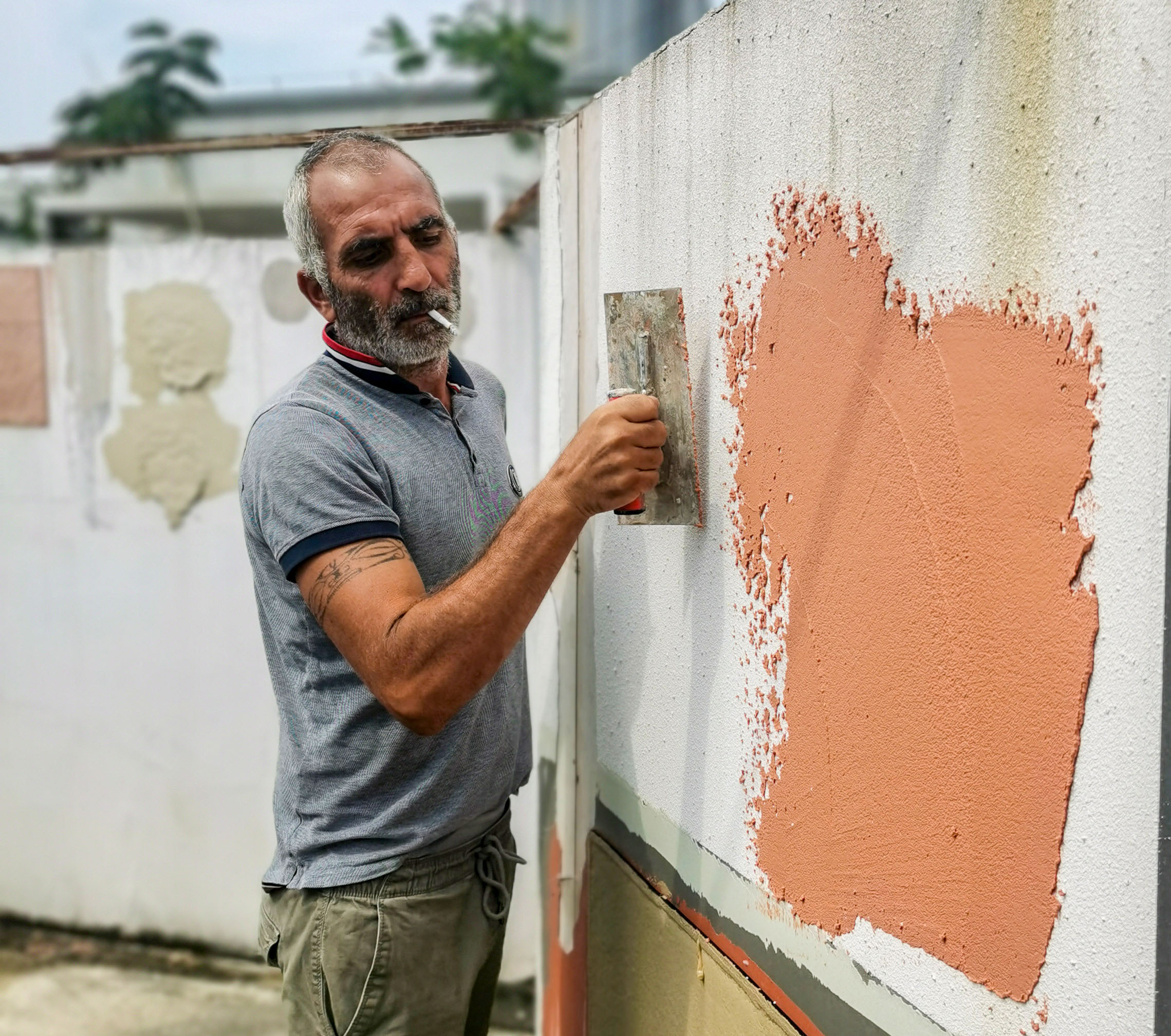
On-site application of a Simon microcement system: layer build-up, drying window and substrate preparation determine which grade is appropriate.

A finished Simon microcement surface inspected by a client — seamless appearance is a system outcome, not a single-product outcome.
Comparison Table: MC-9000, MC-7860 and MC-7690 Side by Side
The table below compares the three systems on the values that most often appear in a technical submittal. Blank cells indicate values that are not stated in the available documentation for that system; they should be confirmed with the supplier rather than assumed.
| Parameter | MC-9000 (MicroRock) | MC-7860 (HardRock) | MC-7690 |
|---|---|---|---|
| Primary application | Commercial, industrial and heavy-duty floors | Swimming pool interiors and chlorinated wet zones | Interior wall-and-floor kits, including bathrooms |
| Compressive strength | ≥50 MPa (heavy-duty version tested at 65 MPa) | Not stated in the available documentation | >13.0 N/mm² (wall); >30.0 N/mm² (floor/bathroom) after 28 days |
| Flexural strength | 12 MPa | Not stated in the available documentation | Approx. 5.0–8.5 N/mm² after 28 days |
| Surface hardness | Mohs ≥6 (≥7 recommended for heavy-duty areas) | Not stated in the available documentation | >2H (wall); >4H (floor) |
| Slip / friction | R11 or higher when wet | 0.77 dry friction coefficient | Not stated in the available documentation |
| Water and chemical resistance | Water absorption <0.2%; stains wipeable within 10 minutes | Passes 168-hour chlorinated water immersion | No abnormalities after more than 72 hours of soaking (floor/bathroom) |
| Thermal performance | −40 °C to 130 °C; thermal conductivity 0.8 W/(m·K); suited to underfloor heating | Vicat softening point >155 °C | Not stated in the available documentation |
| Fire rating | Tested under ASTM E84-24 (SGS report SDFTS25005822R01_EN) | Not stated in the available documentation | A1 (non-combustible) |
| Environmental / safety | Formaldehyde-free, near-zero VOC, FDA food contact, Ten-ring, EU CE | Food-contact and maternal-infant safety | Formaldehyde-free, low VOC, French A+ |
| Wear / durability evidence | Surface wear under 0.1 mm after 5 years in a tested commercial project | Not stated in the available documentation | Not stated in the available documentation |
| Drying time | Not stated in the available documentation | Not stated in the available documentation | 4–8 hours |
| Best-fit decision trigger | Load, abrasion, hygiene, slip when wet | Permanent chlorinated immersion | Interior walls, floors, wet rooms, short programme |
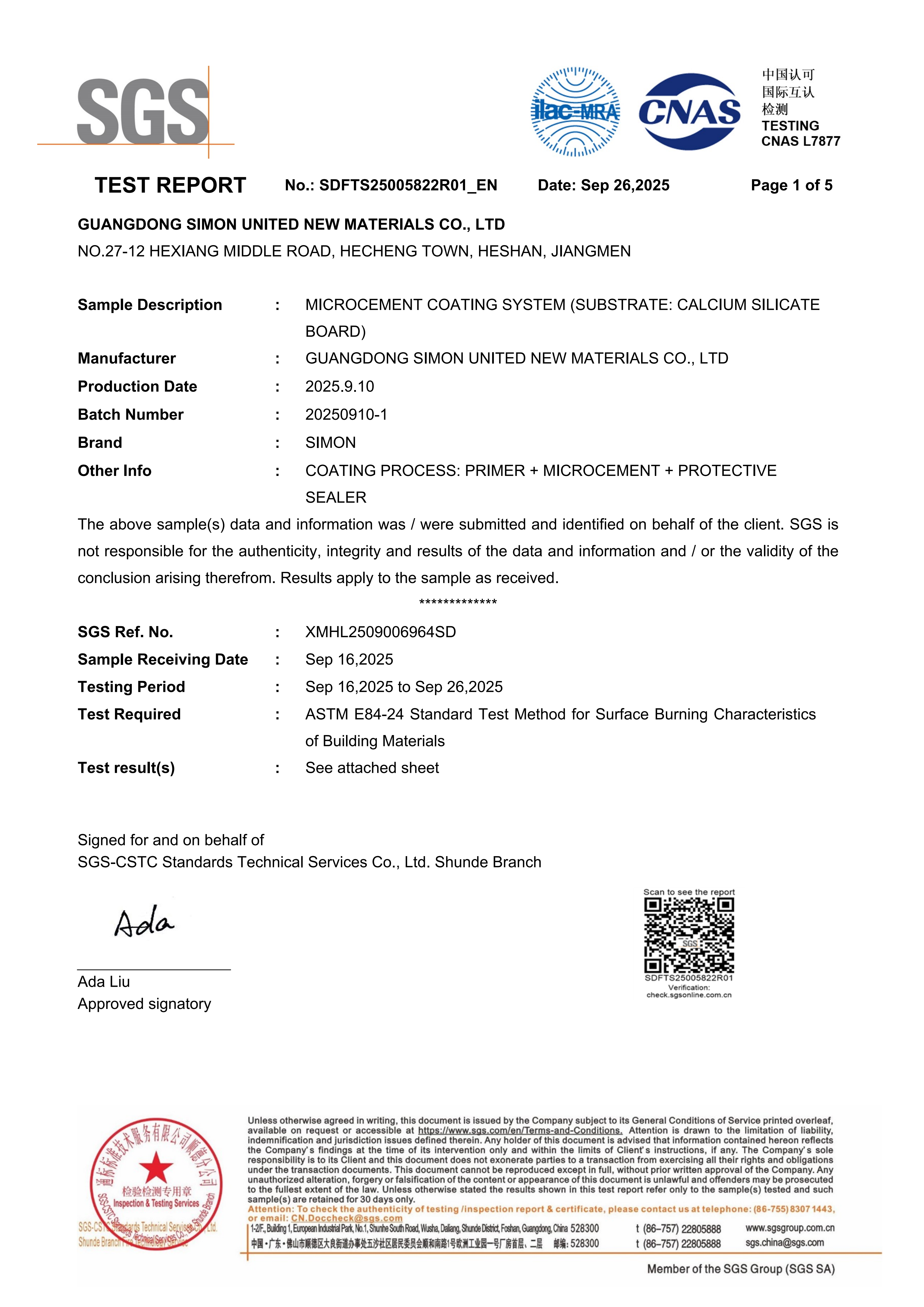
Supporting documentation: ASTM E84-24 surface burning characteristics test report SDFTS25005822R01_EN, issued by SGS-CSTC Standards Technical Services Co., Ltd. Shunde Branch.
FAQ
1. Are these microcement systems certified for fire performance, indoor air quality and food-contact environments?
Simon microcement systems carry different certifications depending on the family. MC-7690 has an A1 non-combustible fire rating, is formaldehyde-free with low VOC emission and complies with the French A+ environmental standard, and is made from natural mineral powders and water-based resins for safe indoor use. MC-9000 carries FDA food contact standards, Ten-ring certification and EU CE certification, with formaldehyde-free and near-zero VOC emissions. MC-7860 is positioned around food-contact and maternal-infant safety characteristics. Across the range, Simon products are formaldehyde-free and low in VOC, holding EU Grade A+ and China Green Building Material certification, and an ASTM E84-24 surface burning characteristics test report (SDFTS25005822R01_EN, issued by SGS-CSTC Standards Technical Services Co., Ltd. Shunde Branch) is available as supporting documentation.
2. Can these systems be supplied in custom colours and private label, and can they be applied over existing tiles?
Yes on both counts where the project allows. Simon operates an OEM production mode with customization of colour, packaging, custom formula and private label, supported by 120 basic colours and more than 1,000 colour mixing formulas for custom colour microcement. Microcement systems can be applied directly on base surfaces such as ceramic tiles and marble, enabling convenient construction, a shorter construction period and a seamless integrated decorative effect across walls, floors and ceilings without demolition. Final feasibility always depends on the condition of the existing substrate, which should be assessed before the layer build-up is fixed.
3. What drives the cost of a microcement project?
The largest avoidable cost driver is grade mismatch. Specifying a heavy-duty commercial floor system on a decorative wall, or a decorative wall grade on a production floor, both add cost without adding value. Beyond grade selection, the published commercial parameters that most affect budget are the minimum order quantity of one 20-foot container, the 30–45 day standard lead time, and the number of distinct systems a single project requires — a project that combines MC-9000 floors with MC-7690 walls will carry two material lines rather than one. Projects that can be standardised onto a single family typically reduce both material complexity and site handling.
4. How can a buyer validate a grade before committing to a full order?
Validation is normally done in three steps: verify the performance values on the technical data sheet against the project requirement (for example ≥50 MPa compressive strength, R11 wet anti-slip and <0.2% water absorption for a heavy-duty floor, or the 168-hour chlorinated water immersion result for a pool interior); request the compliance documents relevant to the market, including the ASTM E84-24 report, French A+, EU CE or FDA food contact documentation as applicable; and carry out a trial application on the actual substrate type before full-scale installation. Sample and document requests can be directed to Simon’s sales team using the contact details below.
5. What is the production lead time, and how does a project start?
Simon operates with a monthly capacity of 660 tons, a minimum order quantity of one 20-foot container, a standard lead time of 30–45 days and 100% testing as the quality control standard, with remote after-sales support. A project starts by defining the exposure conditions described in the step-by-step section above, then confirming the matching family, colour direction, documentation requirements and delivery schedule. Project-specific colour, packaging, formula and private label requirements are handled through the OEM programme.
Conclusion: Rank by Application, Then Confirm the Paperwork
Ranking microcement systems by application produces a simple decision rule. When load, abrasion and hygiene are the constraints, the answer is MC-9000 MicroRock, with ≥50 MPa compressive strength, 12 MPa flexural strength, an R11 or higher wet anti-slip rating, water absorption below 0.2%, a −40 °C to 130 °C service range and 0.8 W/(m·K) thermal conductivity for heated commercial floors. When permanent chlorinated immersion is the constraint, the answer is MC-7860 HardRock, verified by a 168-hour chlorinated water immersion pass, a 0.77 dry friction coefficient and a Vicat softening point above 155 °C. When the constraint is a seamless interior wall-and-floor finish delivered on a short programme, the answer is MC-7690, with an A1 fire rating, 4–8 hour drying time, >4H floor surface hardness and French A+ environmental compliance.
Matching the grade to the exposure is what prevents buying capability the project will never use, and paying again later for capability it actually needed. Once the family is fixed, the remaining work is documentation: performance values, certification, colour scope and commercial terms, confirmed in writing before the first layer goes down.
Next Step
To request samples, technical documentation or a project quotation for MC-9000, MC-7860 or MC-7690, contact the Simon United Building Materials team directly.
Email: meidafu@126.com | Tel / WhatsApp: +86 183 1904 6545
Product brochure (public download): Simon microcement product brochure
Websites: en.webstucco.com | pufloor.com
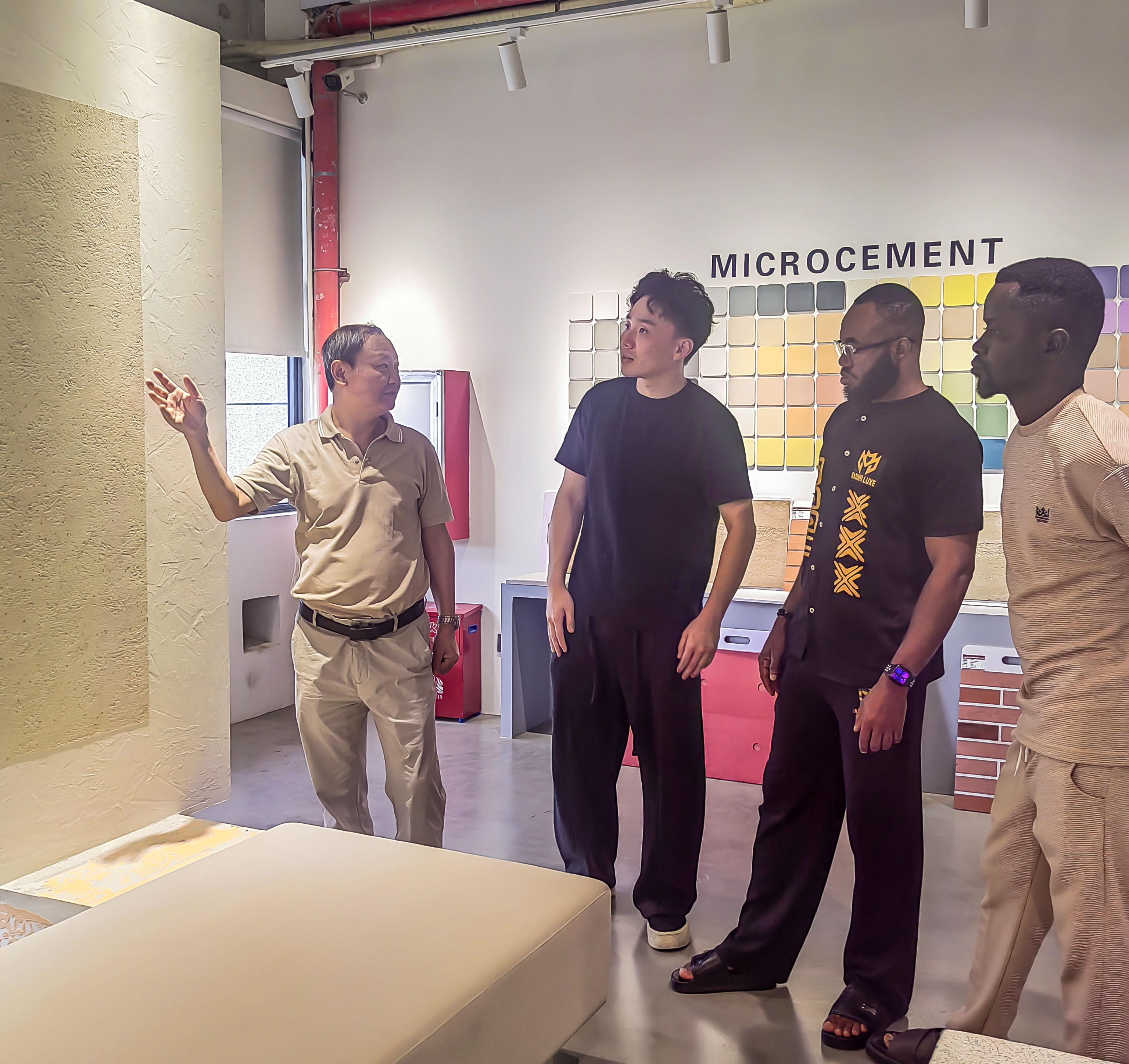
Clients reviewing Simon microcement documentation and confirming an order — the final step after grade selection and validation.
Simon United Building Materials Co., Ltd. — Address: 29th floor 21 Room, East Block, Coastal Times, No. 12069 Shennan Avenue, Honghuayuan Community, Nantou Street, Nanshan District, Shenzhen, China. Factory: No.27-12 Hexiang Middle Road, Hecheng Town, Heshan City, Jiangmen City, China.
Have Questions or Need More Details?
Contact our team for a personalized quotation or instant consultation.
Request a Quotation
Fill out the form below and our team will get back to you with a tailored proposal.
WhatsApp Direct Chat
Prefer to chat in real-time? Message us on WhatsApp for instant assistance & quick answers.
- Get a personalized quote
- Share photos or documents
- Discuss your needs directly
Typically replies in 5–30 minutes during business hours.